

Modern Living Room Furniture Ideas to Transform Your Space
Donna MaloneWhen we talk about modern living room furniture, we’re really talking about a "less is more" mindset. It’s all about embracing clean lines, simple shapes, and pieces that feel both intentional and functional. The goal isn't to fill the space, but to create a calm, organized, and sophisticated room that just feels right.
Getting the Modern Living Room Aesthetic
Before you even start looking at sofas or coffee tables, it's worth taking a moment to really get what the modern aesthetic is all about. This isn't just about following trends; it's a design philosophy where every single piece has a clear purpose.
Think of it like a beautifully designed piece of tech—sleek and simple on the outside, but built from the ground up to be incredibly intuitive. The aim is to craft a personal sanctuary that feels uncluttered and serene.
It's an approach that has caught on everywhere. People are looking for furniture that blends sharp style with real-world practicality, and it's driving huge growth in the home furnishings market. In fact, the global living room furniture market was valued at around USD 200 billion in 2023 and is expected to hit USD 320 billion by 2032. You can dig into this market trend to see how our collective taste for functional beauty is shaping the industry.

The Core Pillars of Modern Design
To really nail this look, it helps to keep a few key ideas in mind. These aren’t strict rules, but more like guiding principles that will help you choose your furniture with confidence.
-
Minimalism and Simplicity: This is the heart and soul of modern design. It’s about stripping back all the extra fluff and ornamentation to let the shape and material of each piece do the talking. Every item in the room should feel like it was chosen for a reason.
-
Form Follows Function: It’s a classic phrase from architect Louis Sullivan, and it’s as true today as ever. It simply means that a piece's design should be driven by what it's meant to do. For your living room, that means furniture that is comfortable and useful, without any unnecessary frills.
-
Strategic Use of Negative Space: In modern design, the empty space is just as critical as the furniture itself. Leaving some breathing room—what designers call negative space—is what keeps a room from feeling crowded. It gives your eyes a place to rest and creates a wonderful sense of openness.
When you start thinking this way, you stop just buying furniture and start curating a space. You’re building an environment that’s not only visually calming but also perfectly in sync with how you actually live.
Choosing Your Anchor Furniture Pieces
Every great living room starts with a single, defining decision. That decision? Your anchor furniture. These are the foundational pieces—the sofa, the sectional, the accent chairs—that set the entire tone and function for your space. Think of them as the lead actors in your design story; everything else is just the supporting cast.
Choosing these pieces isn't just about picking a pretty color. It’s about being honest about how you live. A growing family might find a modular sectional to be a total game-changer, while a sleek, low-profile sofa makes a powerful minimalist statement in a city apartment. Get this right, and you’ve created a space that’s not just stylish, but genuinely livable.
It’s no surprise, then, that indoor furniture is such a massive part of the global market. These pieces are central to our daily lives. In fact, indoor furniture is on track to command a staggering 69% share of the global furniture market in 2025. And according to one in-depth furniture market report, over 60% of American renters now lean towards modular living room furniture for its incredible adaptability.
The Sofa: The Center of Your Universe
Let's be real: the sofa is probably the biggest and most important investment you'll make for your living room. It's where life happens—movie nights, long conversations, lazy Sunday afternoons. For a truly modern vibe, look for designs with clean lines, very little fuss or ornamentation, and a strong, confident silhouette.
Here are a few popular modern styles to consider:
- The Low-Profile Sofa: With its low back and deep seats, this style feels open and airy, tricking the eye into thinking the room is bigger than it is. It's a perfect match for minimalist or mid-century modern aesthetics.
- The Modular Sectional: This is the undisputed champion of versatility. A modular sectional can be reconfigured for a party, a family movie night, or just a change of scenery. Its chameleon-like nature makes it brilliant for active households and open-concept spaces.
- The Tuxedo Sofa: Defined by its arms and back being the exact same height, this sofa delivers a clean, geometric look that feels both classic and totally current. It brings a quiet, tailored elegance to a room.
Your sofa isn't just a place to sit; it's the functional and visual heart of your living area. Choosing one with a timeless design and durable fabric is an investment that will pay off in comfort and style for years.
Measure Twice, Buy Once
We’ve all been there—falling head-over-heels for a piece of furniture online, only to have it completely overwhelm the room in person. Before you even think about clicking "add to cart," get out the measuring tape.
Start by measuring the length and width of your room, taking note of where doors, windows, and major walkways are. Here’s a pro tip: use painter's tape to mark the exact footprint of your potential sofa on the floor. This simple trick helps you visualize not just if it will fit, but how you’ll move around it. A good rule of thumb is to leave at least 30 to 36 inches for main pathways to keep the room feeling open and easy to navigate.
For more tips on getting the layout just right, check out our guide on how to arrange stylish living room furniture for perfect flow.
Accent Chairs: The Perfect Supporting Role
Once your sofa is in place, accent chairs are your chance to inject some serious personality and create smaller, more intimate conversation zones. The key is to find chairs that complement your sofa, not necessarily match it. In modern design, a little contrast is a very good thing.
Here’s how you can find the perfect seating to complement your anchor pieces.
Modern Seating Style Comparison
| Seating Type | Best For | Key Feature | Styling Tip |
|---|---|---|---|
| Armchair | Creating a cozy reading nook or flanking a fireplace. | Comfort and classic appeal. | Pair with an ottoman and a side table to create a self-contained relaxation zone. |
| Slipper Chair | Smaller spaces or areas where you need armless seating. | Compact, armless design. | Use in pairs to create a balanced look without adding visual bulk. |
| Wingback Chair | Adding a touch of drama and traditional elegance. | High back and "wings." | Choose one in a bold, modern fabric to give this classic shape a contemporary twist. |
| Lounge Chair | Making a sculptural statement and prioritizing comfort. | Often reclined with a unique form. | Treat it like a piece of art. Place it where its silhouette can be appreciated from all angles. |
With the right combination of seating, your living room will feel layered, interesting, and ready for anything.
Final Thoughts on Anchor Pieces
By carefully choosing your sofa and accent chairs, you're laying a rock-solid foundation for a modern living room that is beautiful, functional, and a true reflection of your life. These anchor pieces will guide every other design choice you make, ensuring the final result is a space that feels cohesive, inviting, and completely you.
Mastering Modern Materials and Finishes
The real soul of modern design isn't just about clean lines; it’s about the honest, intentional way materials are used. Think of it like this: a picture of a forest is nice, but it's nothing like the feeling of actually walking through one. The tactile world of textures and finishes is what truly brings your living room to life.
Mastering this is all about the art of contrast. It’s about pairing hard, cool surfaces—like a sleek metal and glass coffee table—with the soft, inviting texture of a bouclé sofa. This interplay is what creates that rich, layered look that feels so sophisticated and complete.
The Foundational Palette of Materials
Certain materials are just the bedrock of the modern aesthetic. They’re chosen for their natural beauty, their durability, and their ability to create a calm, organic vibe. Getting to know these core components is the first step in pulling together a cohesive space.
- Light-Toned Woods: We’re talking oak, ash, and maple. These woods bring in warmth and a connection to nature without ever feeling heavy or dated. A light wood media console or the simple legs of an armchair can ground the room beautifully.
- Structural Metals: Materials like brushed steel, matte black aluminum, or even a warm brass add a crisp, architectural edge. They provide that sharp contrast to softer materials and really help define the clean lines that are so essential to modern furniture.
- Natural Stone: Marble, travertine, or slate introduce a sense of timeless luxury and raw texture. Even something as small as a stone-topped side table can add significant visual weight and sophistication.
The goal here is to build a tactile landscape. When you thoughtfully combine wood, metal, stone, and soft textiles, your living room becomes a space that’s as deeply pleasing to touch as it is to see.
Weaving in Texture for Warmth and Depth
Once your foundational materials are in place, the next layer is all about texture. This is how you keep a modern room from feeling cold or sterile. It’s about adding softness and complexity through your choice of fabrics and finishes.
Think about the fabrics on your main seating. A nubby tweed, a soft chenille, or a plush velvet can instantly make a minimalist sofa feel so much more inviting. This is also where a growing awareness for sustainability is making its mark. In both North America and Europe, markets known for high spending on luxury decor, sustainable materials are now a top preference. We’re seeing a demand for recycled fabrics and eco-friendly woods that promise longevity without compromising on style. You can discover more insights about these living room furniture trends and their growing impact.
This decision tree can help you visualize how to choose seating based on both your practical needs and style considerations.
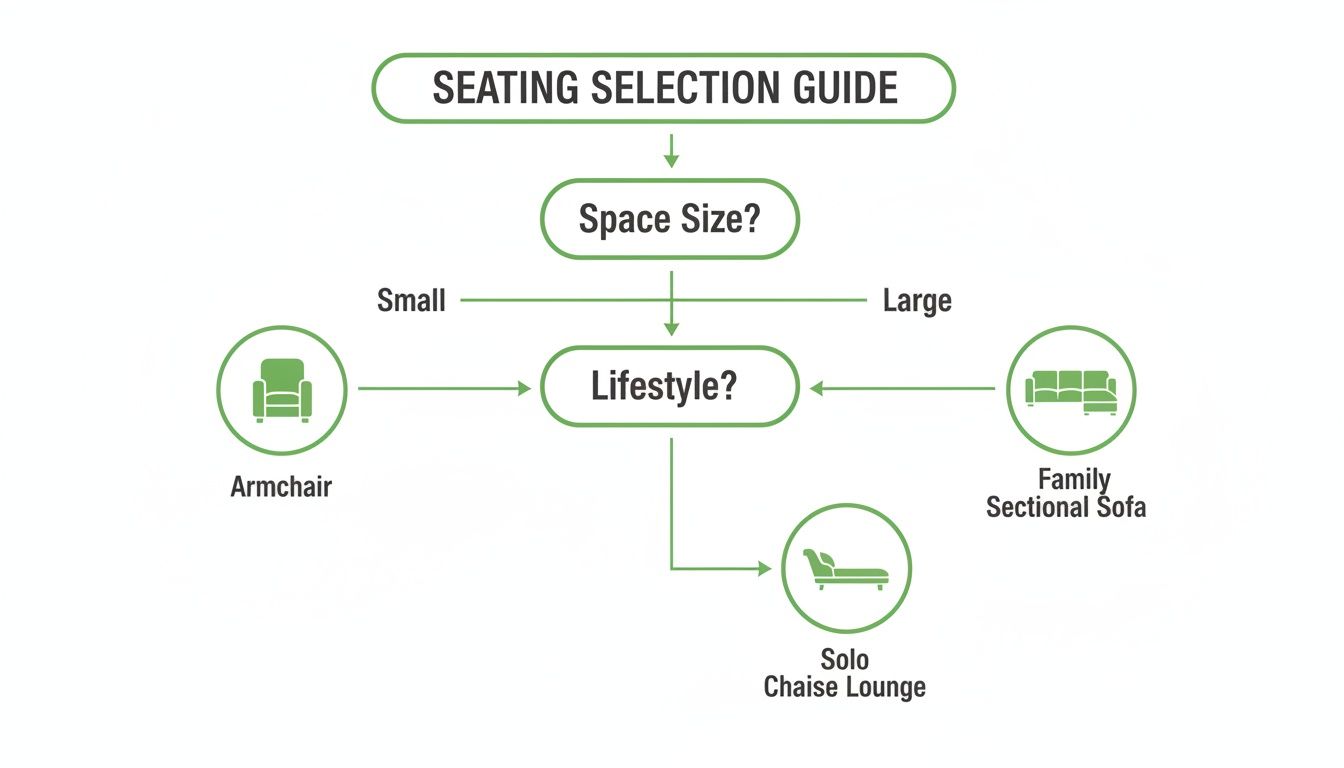
As the chart shows, the right furniture is a perfect balance between the scale of your space and the demands of your lifestyle. It’s about guiding you toward a choice that is both beautiful and truly functional.
The Art of the Finish
Finally, don't forget to pay attention to the finish. The exact same material can have a completely different feel depending on how it's treated. A matte finish, for instance, absorbs light and has a soft, contemporary feel, making it perfect for metal table legs or cabinet hardware.
On the flip side, a glossy or lacquered finish reflects light, adding a touch of glamour and making a real statement. A high-gloss coffee table can become an instant focal point. Mixing these finishes—like a matte black lamp base on a polished wood side table—is a subtle but powerful way to add another layer of depth to your modern living room furniture ideas.
Creating Your Modern Color Palette
Color is where your living room’s personality truly comes alive. Modern design might be famous for its clean lines and minimalist shapes, but your color choices are what make the space feel like yours. Getting it right isn't about following a rigid set of rules, but about making deliberate, thoughtful decisions.
Picture your living room as a blank canvas. The walls and your biggest furniture pieces—like the sofa—are the base coat. Everything else, from pillows and throws to art and accessories, are the final brushstrokes that pull the whole masterpiece together.
Start with a Neutral Foundation
Almost every stunning modern living room starts with a neutral backdrop. This isn't about making the space feel cold or boring; it's about creating a sense of calm that lets the beautiful shapes and textures of your furniture really sing. This foundation is a cornerstone of so many successful modern living room furniture ideas.
Think in shades of white, cream, soft gray, and warm beige. These colors are your best friends because they bounce natural light around the room, making it feel bigger, brighter, and more airy. A light gray sofa against crisp white walls, for instance, sets a serene stage you can then build on.
Key Takeaway: A neutral base isn't a lack of color. It’s a calm, cohesive canvas that makes every pop of color you add feel more intentional and powerful.
This approach keeps the room from feeling cluttered or chaotic, ensuring the sleek lines of your modern furniture remain the star of the show. With this tranquil foundation in place, you’re ready to inject some personality.
Layering in Accent Colors with Intention
Now for the fun part: adding pops of color. The modern way to do accents is with precision. In this case, less is almost always more. Instead of drenching an entire wall in a loud color, think smaller and more strategic.
Here’s how to bring in those beautiful hues:
-
Earthy and Muted Tones: These colors feel right at home in a modern space. Shades like olive green, deep terracotta, dusty blue, and rich mustard add warmth and a touch of sophistication without screaming for attention. An olive green velvet armchair or a few terracotta-hued pillows can offer the perfect organic contrast to a neutral sofa.
-
A Single Bold Statement: If you’re feeling more dramatic, pick one powerful color and use it sparingly. A single, large-scale piece of abstract art with a jolt of a primary color, or maybe a sculptural vase in a striking cobalt blue, can act as an incredible focal point.
-
Monochromatic Textures: You can create amazing depth by layering different tones and textures from the same color family. Imagine a beige sofa styled with pillows in camel, taupe, and deep brown, each with a unique feel—like linen, bouclé, or even faux fur.
To get the absolute most out of your color palette and have total control over the room's mood, you might also want to explore smart lighting systems. This kind of tech lets you tweak the warmth and even the color of your lights, completely changing the vibe for any occasion.
By layering color with purpose, you end up with a living room that’s visually captivating, deeply personal, and perfectly in tune with modern design. It's a space that feels curated, complete, and a true reflection of your style.
Arranging Furniture for Function and Flow
You’ve found the perfect modern furniture, but that's only half the job. How you arrange it is what really brings a room to life, turning a collection of beautiful objects into a space that feels both inviting and intuitive. The real goal is to create a layout that not only looks stunning but actually works for the way you live.
It’s all about creating clear pathways, cozy conversation spots, and making sure every single piece has a purpose.
Think of it this way: a great layout is like the user interface on your favorite app. When it's designed well, you don't even think about it—you just glide through the space effortlessly. A clunky, poorly arranged room, on the other hand, creates friction. It makes simple things, like walking to the window or chatting with a friend, feel awkward and disjointed.
As our homes become the center of our universe, it's no surprise that the demand for furniture that’s both beautiful and functional is skyrocketing. In fact, the market for living and dining room furniture is expected to jump from USD 556.29 billion in 2025 to a massive USD 698.56 billion by 2030. This trend shows just how much we all crave spaces that truly work for us.
Establish a Clear Focal Point
Every well-designed room has a focal point. It's the first thing that catches your eye when you walk in and acts as the anchor for everything else. This visual anchor gives the entire room a sense of order and intention.
Sometimes, the focal point is built-in—a beautiful fireplace, a big picture window with a killer view, or unique architectural details. If your room is more of a blank canvas, don't worry! You can easily create one. Hang a large piece of statement art, bring in a sleek media console, or even create an accent wall with dramatic wallpaper. Once you know what your focal point is, arrange your main seating to face it.
Create Conversation Zones
At its heart, a living room is about connection. To make it easy for people to gather and chat, you need to group your furniture into comfortable conversation zones. The trick is to place seating close enough for easy conversation (no shouting required!) but with enough breathing room so no one feels cramped.
Here are a few classic layouts to try:
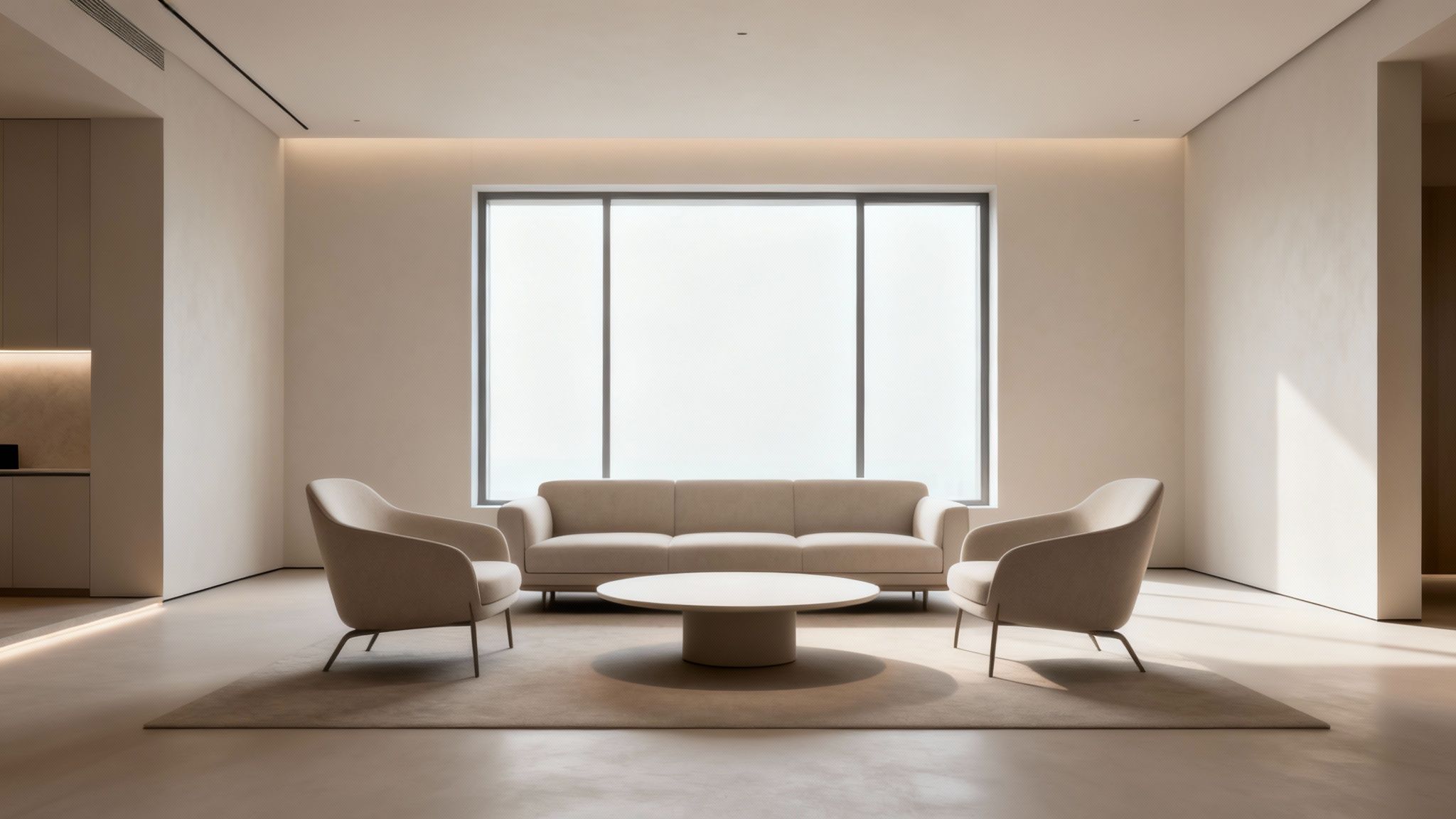
- The U-Shape: Perfect for larger gatherings. Place a sofa in the center and flank it with two accent chairs to create an inclusive, welcoming U.
- The L-Shape: A sectional sofa does the work for you, naturally forming a cozy L-shape that's ideal for family movie nights.
- Parallel Seating: For a more formal, balanced look, place two sofas (or a sofa and two chairs) directly facing each other. This setup is fantastic for one-on-one conversations.
Pro Tip: Keep your main seating pieces no less than 3.5 feet and no more than 10 feet apart. This is the sweet spot that keeps conversation flowing naturally.
Ensure Proper Traffic Flow
Finally, let’s talk about flow. You need to be able to move through your living room without constantly bumping into furniture or squeezing through tight spots. It's all about creating clear, unobstructed pathways.
A good rule of thumb is to leave 30 to 36 inches of open space for major walkways, like the path from a doorway to the sofa. This same logic applies to the space between furniture pieces. For example, keep your coffee table about 16 to 18 inches from your sofa—close enough to be useful, but far enough for legroom.
For a deeper dive into getting these measurements just right, check out our complete guide on how to arrange living room furniture. And if you want your space to always look its best, borrowing some professional tips for home staging can work wonders for everyday living, too. When you master these simple principles, your modern living room won't just look incredible—it'll feel incredible, too.
Bringing Your Modern Living Room to Life
You’ve got the principles down and a layout in mind. Now for the fun part: picking out the pieces that will actually pull your new living room together. This is where your vision starts to become a reality, but let's be honest—shopping for big-ticket items online can feel like a bit of a gamble. How do you really know that gorgeous sofa will look and feel as good in your home as it does on the screen?
The secret is to shop smart, not just with your heart. The best online stores get it. They understand that you can’t judge scale from a single photo or feel the texture of a fabric through your monitor, so they build tools and provide resources to close that gap.
Vetting Your Online Retailer
Before you commit to a piece of furniture, you need to commit to the retailer. A great store makes the whole experience feel transparent and reassuring, not stressful.
Here’s a quick mental checklist to run through before you click “buy”:
- High-Resolution Imagery: Are there multiple, crystal-clear photos from every angle? Even better, look for close-ups of the stitching and lifestyle shots that show the piece in a real room to help you gauge its true scale.
- Detailed Product Descriptions: You should be able to find everything—dimensions, materials, assembly notes, and care instructions—without having to dig. Vague descriptions are a huge red flag.
- Customer Reviews and Photos: This is gold. Real-world feedback and customer photos show you how the furniture holds up in an actual home, not a perfectly lit photo studio.
- Clear Shipping and Return Policies: Know the costs, the delivery timeline, and what your options are if the item arrives damaged or just doesn't feel right in your space. A fair return policy is a sign of a company that stands behind its products.
Think of this vetting process as your final quality check. Spending a few extra minutes on this protects your investment and makes sure what shows up at your door is exactly what you were dreaming of.
As our cities get denser and our living spaces shrink, the need for smart, adaptable furniture has exploded. This global trend toward urbanization is precisely why multifunctional designs, like modular sofas with built-in storage, have become so sought-after. It's a major force driving the impressive growth of the online furniture market. You can read the full research about the living room furniture market to get a deeper look at this shift.
Ultimately, designing your modern living room should feel inspiring, not intimidating. Now that you're armed with a solid grasp of design principles and a savvy shopping strategy, you can move forward with confidence. You have everything you need to turn those modern living room ideas into a space that’s not just stunning, but a perfect reflection of you.
A Few Final Questions, Answered
Jumping into modern design can feel exciting, but it often brings up a few questions. Let's tackle some of the most common ones so you can move forward with total confidence.
How Can I Make a Modern Living Room Feel Cozy and Not Cold?
This is the classic modern design dilemma! The secret is to think in layers of texture. While the style is built on clean lines and a less-is-more attitude, you can bring in so much warmth through the materials you choose.
Imagine a plush, high-pile area rug that your feet sink into. Picture a collection of throw pillows in different weaves—maybe a soft velvet next to a chunky knit—and a beautifully soft blanket casually draped over the arm of your sofa. These tactile details are everything.
Natural elements are also your best friend here.
- Add Warm Woods: A simple accent table or bookshelf in a light oak or walnut instantly breaks up the sleekness.
- Bring in Greenery: A few well-placed plants literally breathe life and organic shape into the room.
- Layer Your Lighting: Ditch the single overhead light. Instead, use floor lamps and table lamps with warm-toned bulbs to cast an inviting, ambient glow.
These touches soften the edges and transform a potentially sterile space into a welcoming retreat.
What Is the Most Important Piece of Furniture in a Modern Living Room?
Hands down, it's the sofa or sectional. Think of it as the anchor of the entire room. It’s the largest piece, the one that sets the visual tone, and honestly, it’s where life happens—movie nights, conversations, lazy Sunday afternoons.
When you're picking one out, go for a timeless design with clean, simple lines and upholstery that’s built to last. The color you choose will likely become the foundation of your palette, and its size will determine where everything else goes. Investing in a truly great sofa is the single most important decision you'll make for the space.
Can I Mix Modern Furniture with Other Styles?
Oh, absolutely! In fact, you should. Mixing styles is how you create a space that feels genuinely personal and collected over time, not like a showroom floor. The key to getting it right is finding a common thread.
For instance, a sleek modern sofa pairs beautifully with a vintage mid-century modern coffee table because they both celebrate simple forms and honest materials. Or you could bring a rustic, reclaimed wood bookshelf into a modern room for a fantastic textural contrast.
The trick to making it all feel cohesive is to stick to a unified color palette. Let the modern style be the dominant voice, and then let other pieces join the conversation as accents.
What Are the Best Colors for a Modern Living Room?
Most modern spaces start with a calm, neutral foundation—think shades of white, soft gray, beige, or a warm greige. This creates a clean, uncluttered canvas that really lets the shapes and textures of your furniture shine.
Once you have that neutral base, you can start layering in accent colors. Earthy, grounded tones like olive green, rich terracotta, and deep navy blues are perfect for adding depth without overwhelming the space. If you're feeling a bit bolder, a strategic pop of a single vibrant color—like a mustard yellow pillow or a piece of abstract art with a splash of burgundy—can be incredibly chic and effective.
Ready to turn these ideas into reality? Head over to Fluent Trends and explore our curated collections. We've handpicked designer-approved furniture and decor that make modern living effortless and beautiful. Shop our modern living room essentials today!