

Stylish Living Room Furniture for a Chic and Functional Space
Donna MaloneWhen you hear the phrase "stylish living room furniture," what comes to mind? It’s easy to picture a specific trend you saw in a magazine, but true style is so much more than that. It’s about creating a thoughtful blend of your personal taste, timeless design, and how you actually live your life.
Think of it as the art of putting together a space that feels completely you—a room that’s not just comfortable and balanced, but stays inviting for years to come.
What Truly Makes Living Room Furniture Stylish
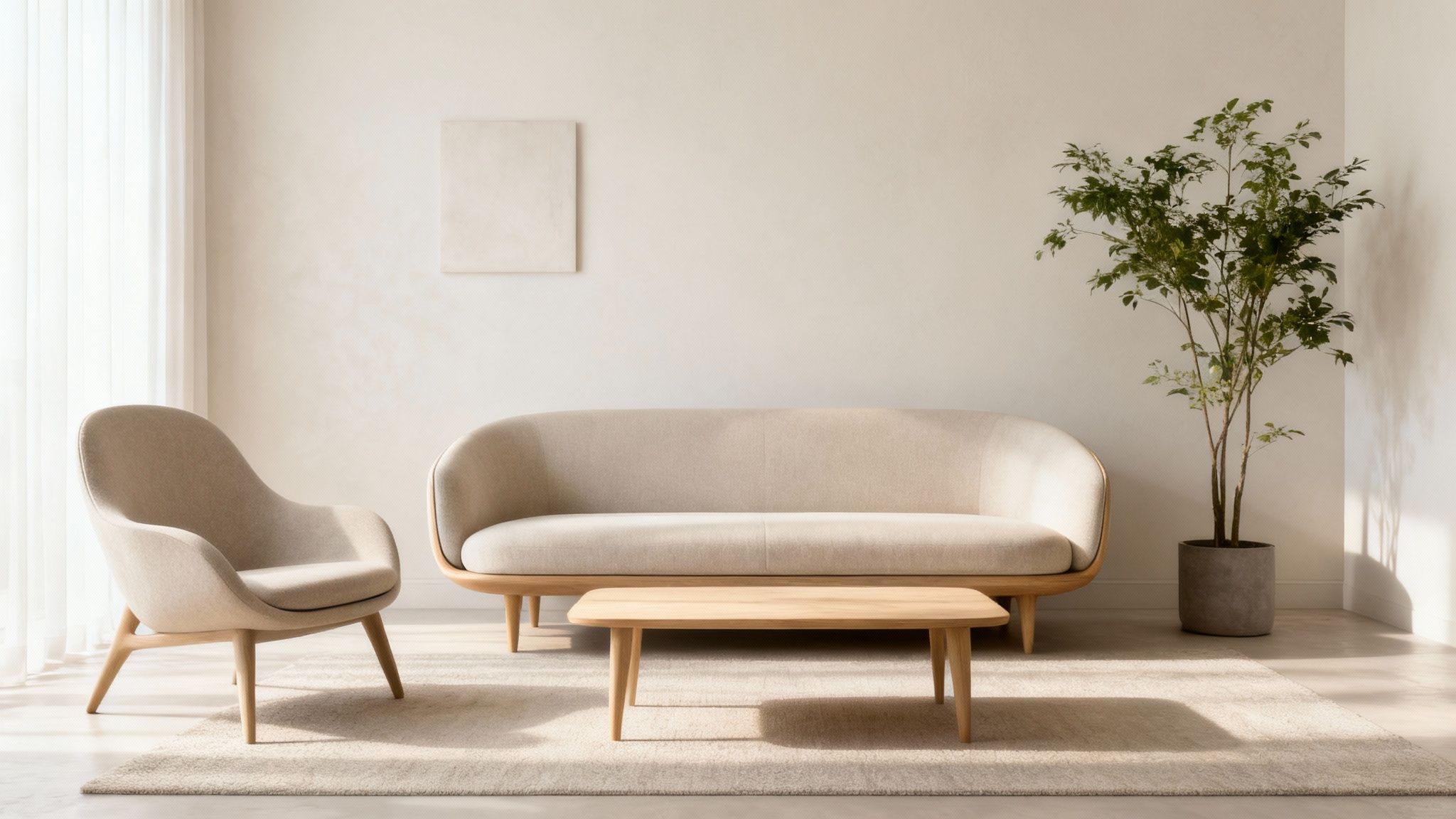
Defining "stylish" can feel a little fuzzy, but it really boils down to a handful of core ideas that outlast any fleeting fad. It's less about a specific look and more like a recipe where your personality, your day-to-day needs, and some basic design fundamentals all come together just right.
The goal here isn't just to create a room that looks good on Instagram; it's to curate a space that feels inherently right for the way you live. This means picking pieces that speak to your personal aesthetic, whether that’s the clean, uncluttered vibe of minimalism, the organic warmth of mid-century modern, or the free-spirited energy of bohemian decor.
Finding Your Core Aesthetic
Before you can choose furniture you'll love for the long haul, you have to know what you, well, love. Pinpointing your personal style is always the first step. Instead of drowning in endless options online, start by focusing on the fundamentals that just click with you.
Are you drawn to sleek, simple shapes, or do you prefer more ornate, detailed designs? Do you gravitate toward natural materials like wood and leather, or do you love the luxe feel of velvet and brass?
The most stylish rooms are authentic reflections of the people who live in them. Your furniture should tell your story, blending form, function, and personality into a cohesive narrative.
Knowing these preferences acts as your filter, helping you cut through the noise and zero in on pieces that will genuinely feel like a part of your home. If you're looking for something truly unique, exploring options from custom sofa manufacturers can be a great way to create a centerpiece that perfectly captures your vision.
To help you get started, here's a quick look at some popular styles and what makes them tick.
Key Characteristics of Popular Living Room Styles
| Style | Core Philosophy | Key Furniture Shapes | Common Materials |
|---|---|---|---|
| Minimalist | "Less is more." Focus on simplicity and function. | Clean lines, geometric forms, low-profile sofas. | Metal, glass, concrete, light woods, linen. |
| Mid-Century Modern | Organic forms meet function. Warm and nostalgic. | Tapered legs, gentle curves, uncluttered silhouettes. | Teak, walnut, leather, tweed, plastic. |
| Bohemian | Eclectic, free-spirited, and personal. | Low-level seating, mismatched pieces, vintage finds. | Rattan, wicker, macramé, colorful textiles, wood. |
| Industrial | Raw, utilitarian, and inspired by urban lofts. | Strong, simple shapes with exposed details. | Exposed metal, reclaimed wood, leather, brick. |
| Scandinavian | Cozy, functional, and light-filled. (Think hygge). | Simple, clean lines with a focus on craftsmanship. | Light woods (birch, pine), wool, shearling, felt. |
Seeing these broken down can help you spot the elements you're naturally drawn to, making it easier to build a cohesive look.
The Principles of Stylish Design
Beyond your personal taste, a few design principles are the secret sauce that makes a living room feel harmonious and pulled together. These are the invisible rules that give a space that professionally designed feel.
-
Scale and Proportion: This is all about how your furniture's size relates to the room and the other pieces in it. A massive sectional will swallow a tiny room whole, while a petite loveseat can get lost in a cavernous space.
-
Balance: A room needs visual balance to feel right. This doesn't mean everything has to be perfectly symmetrical. In fact, asymmetrical balance—like pairing a sofa with two smaller chairs on the other side—often creates a more dynamic and interesting layout.
-
Comfort and Function: At the end of the day, stylish furniture has to work for you. A stunning sofa that's impossible to get comfortable on or a coffee table that's too small for your needs will never truly feel stylish because it's failing at its most important job.
The Five Essential Pieces for a Cohesive Living Room
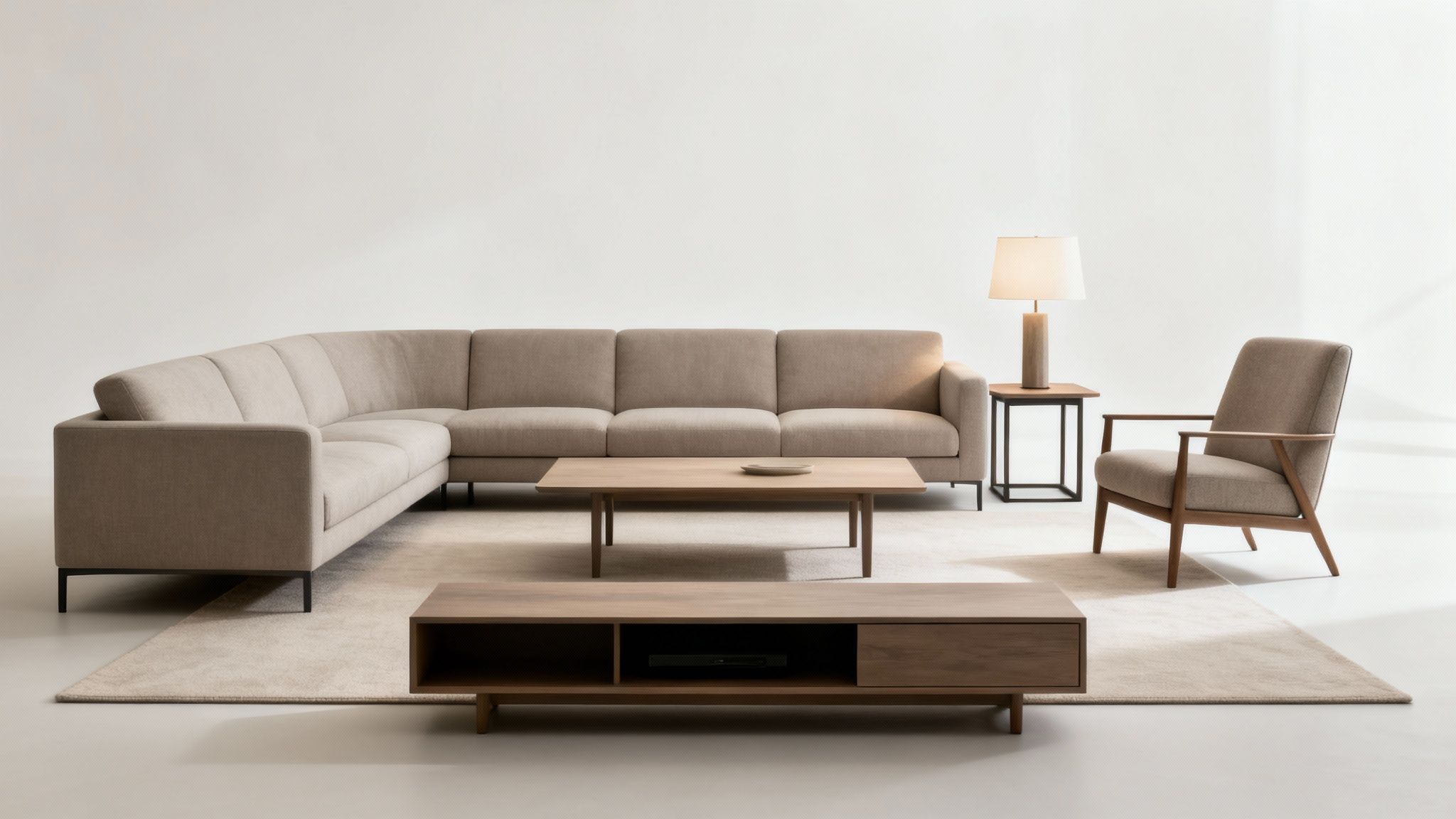
Every truly stylish living room is built around a few foundational pieces. Think of it like a band—you've got the lead singer, the guitarist, the bassist, and the drummer. They can all exist on their own, sure, but they make magic when they work together.
This core group is what designers often call the "Foundation Five." Getting these right simplifies the entire decorating process and guarantees your space feels both functional and visually complete from the get-go.
The Sofa: The Anchor of Your Room
Let's be honest, the sofa is the main character here. It’s almost always the largest and most-used piece of furniture in the room, making it the undisputed anchor that grounds your entire design.
The style, color, and scale of your sofa set the stage for everything else. This is the one piece where you should invest the most thought—and probably the biggest chunk of your budget. It’s not just about looks; the right sofa feels just as good as it looks, becoming the heart of comfort in your home.
Accent Chairs: The Personality Pieces
If the sofa is your anchor, accent chairs are where you let your personality shine. They provide extra, flexible seating and are the perfect excuse to play with a bold color, an unexpected pattern, or a wild silhouette.
An accent chair absolutely does not need to match your sofa. In fact, a contrasting style often makes the room feel more curated and dynamic. Think of it as functional sculpture—a great way to fill an awkward corner or finish a conversation area. For more ideas, check out our guide on using accent furniture for your living room.
The Coffee Table: The Central Hub
The coffee table isn't just a place to put your feet up. It’s the visual and functional center of your seating area—the landing spot for drinks, books, and late-night snacks.
Its importance is reflected in how much we spend on our homes. The market for living room products is projected to hit a staggering USD 214.9 billion by 2025, proving just how much we all value creating a beautiful, comfortable space to live in.
Pro Tip: Your coffee table should be about two-thirds the length of your sofa and roughly the same height as the sofa's seat cushions. This simple rule keeps everything feeling balanced and within easy reach.
Side Tables: The Unsung Heroes
Side tables are the quiet, unsung heroes of the living room. They're the convenient surfaces that hold our lamps, drinks, and phones, bridging the gap between comfort and practicality. Without them, a room just feels unfinished.
Here’s a quick checklist for choosing the right ones:
- Height: A side table should be at or just below the height of the sofa arm it's next to.
- Style: You can go for a matched, symmetrical look or mix things up for a more eclectic, collected vibe.
- Function: Need a place to stash the remotes? Look for a table with a drawer or a lower shelf.
Media Storage: The Functional Finish
In today's world, nearly every living room needs a smart way to handle technology. A media console gives your TV a proper home while neatly hiding away all the clutter—cables, game consoles, and speakers.
Look for a piece that complements your other furniture and offers the right mix of open and closed storage. A great media unit helps keep the focus on your beautiful design, not your devices.
Using Materials and Textures to Create a Designer Look
Ever walk into a room and just feel how well put together it is? That special something, that intangible vibe that makes a space feel professionally designed, often comes down to one key secret: a masterful mix of materials and textures.
When you learn to combine them thoughtfully, these elements add depth, warmth, and a serious dose of visual interest. It's how you turn a nice-but-boring room into a sophisticated retreat you'll never want to leave.
Think of it like putting together a great outfit. A single fabric is fine, but it’s the combination of denim, a chunky knit sweater, and leather boots that creates a truly stylish look. It's the same in your living room. The cool smoothness of a metal lamp, the rich grain of a wood table, and the soft invitation of a velvet pillow all work together to create a space that feels complete and deeply satisfying.
This is the trick to keeping your space from feeling flat or one-dimensional. A room filled with nothing but smooth, similar surfaces can feel cold and a little sterile. A well-layered room, on the other hand, feels curated, comfortable, and totally intentional.
The Art of Layering Different Materials
Layering materials is all about creating a dynamic conversation between the pieces in your room. This isn't about making everything match—it's about making everything work together. The best place to start is with your biggest pieces, like a classic leather sofa or a solid wood coffee table, and then build out from there.
The goal is to create contrast that feels harmonious, not chaotic. For instance, the rugged, natural texture of an oak media console provides a stunning counterpoint to the sleek, polished surface of a marble side table. It’s this interplay of hard and soft, rough and smooth, that makes a room feel alive and interesting.
Consider these classic material pairings for your living room furniture:
- Wood and Metal: This one’s a timeless combination for a reason. The organic warmth of wood is the perfect balance for the cool, industrial edge of metals like black steel, brass, or chrome.
- Leather and Woven Fabrics: There’s something so luxurious about the buttery smoothness of a leather armchair. It’s only made better when placed next to a textured linen sofa or on top of a natural jute rug.
- Glass and Velvet: The crisp transparency of a glass coffee table can keep a plush velvet sofa from feeling too heavy or overwhelming. The result is an elegant, airy look that feels incredibly chic.
Using Texture to Add Warmth and Comfort
If materials are the foundation of your room's design, then texture is what brings in its soul. Texture is everything you can see and feel—the chunky knit of a throw blanket, the high pile of a shag rug, or the intricate weave of a decorative pillow.
These tactile elements are what make a space feel genuinely cozy and welcoming. They’re an open invitation to touch, to relax, and to settle in for a while. Without varied textures, a room can feel a bit sterile, but adding just a few different surfaces can instantly make it feel more like home.
A truly well-designed room engages more than just your eyes. By layering textures, you create a tactile landscape that adds a whole other dimension of comfort and luxury, making the space feel just as good as it looks.
And it seems everyone is catching on. Market research shows a growing demand for high-quality, interesting materials, with sustainability and longevity becoming key factors for furniture shoppers. People are more willing to invest in durable, well-crafted pieces, which just reinforces the idea that the materials you choose are a true investment in your home. You can dig deeper into this trend and its impact on the living room furniture market from DataIntelo.
Practical Tips for Mixing Like a Pro
Ready to start layering? Here are a few simple, actionable tips to help you mix materials and textures with confidence.
- Start with a Neutral Base: Begin with your largest pieces in neutral colors and classic materials, like a simple gray fabric sofa. This gives you a versatile canvas to build upon.
- Introduce One Bold Texture: Add a single, high-impact piece that commands attention. Think of a fluffy shearling accent chair or a heavily grained wood coffee table to act as a focal point.
- Layer with Textiles: This is the easiest and most budget-friendly way to experiment. Toss pillows in different materials (velvet, linen, knit) onto the sofa, drape a soft throw over an armchair, and anchor the space with a textured rug.
- Don't Forget the Details: Small decorative objects have a surprisingly big impact. A ceramic vase, a metallic tray, or a few woven baskets can add that final layer of visual interest that ties everything together.
Follow these guidelines, and you'll be well on your way to blending different elements like a pro, creating a living space that’s not just stylish, but also rich with character and comfort.
Getting Your Furniture Layout and Scale Just Right
You found it. The perfect sofa, those accent chairs with just the right amount of personality, and a coffee table that’s practically a work of art. But when you put it all together in the room, something just feels… off.
It’s a super common problem, and the culprit is almost always layout and scale.
Even the most gorgeous furniture can look awkward if it’s crammed into the wrong spot or is completely the wrong size for the room. Think of your furniture as a team. Each piece has a position, and they all need enough space to work together. When the layout flows and the scale is right, the whole room just clicks.
This is how you turn a collection of individual items into a cohesive, inviting space. The best-designed rooms nail this balance, and this visual guide breaks down how they do it.
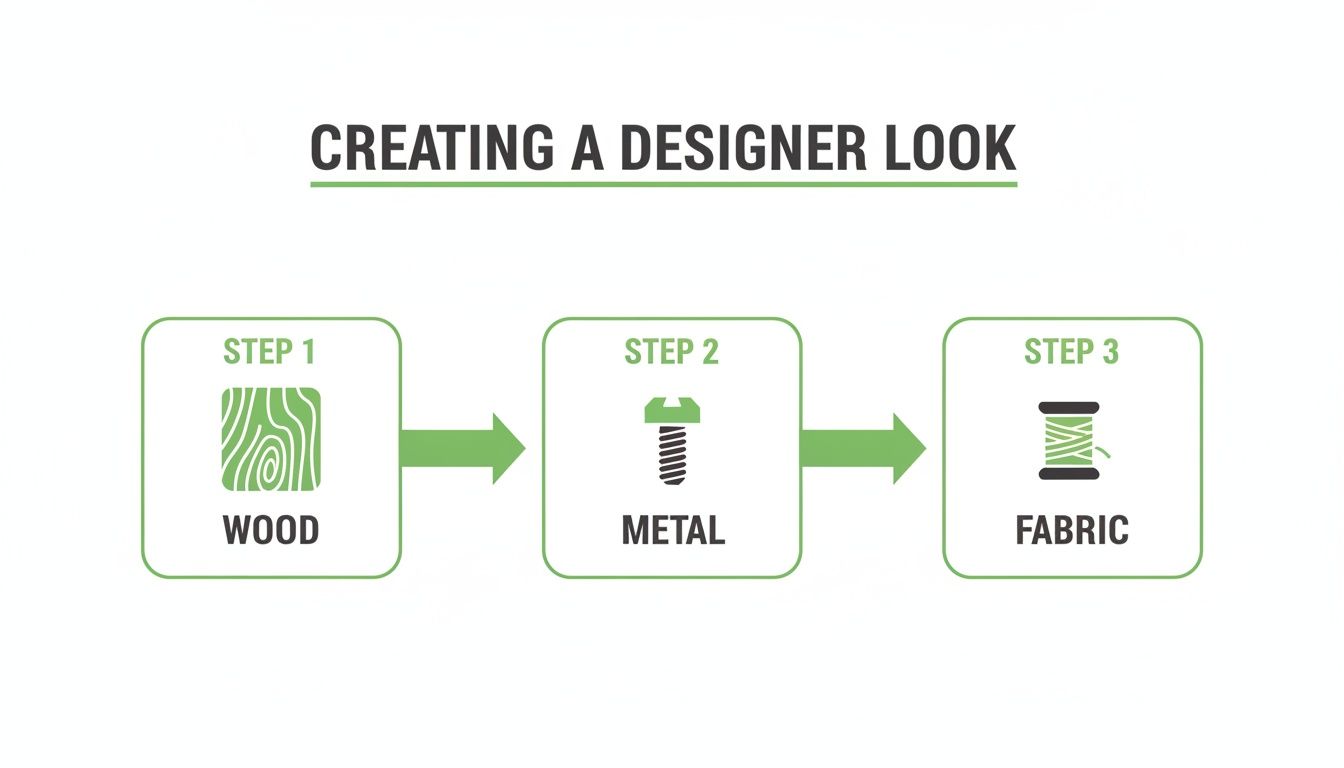
The secret is all in the mix—a sophisticated look almost always comes from blending warm wood, sleek metal accents, and soft, touchable fabrics.
Mastering Furniture Scale
Before you even think about pushing furniture around, let’s talk scale. Scale is just a fancy word for how the size of one object relates to the size of another and to the room itself. Getting this right is everything.
We’ve all seen it: the massive, overstuffed sectional shoved into a tiny apartment living room. It eats up all the visual and physical space, making the room feel claustrophobic. On the flip side, a tiny loveseat and a dainty coffee table can look completely lost and silly in a huge, open-plan great room with soaring ceilings.
The Golden Rule of Scale: Your furniture should look like it belongs. It shouldn't overpower the room, but it shouldn't get swallowed by it, either. A good trick is to vary the heights and weights of your pieces to create interest, but make sure your main furniture is sized appropriately for the room's footprint.
Popular Layout Formulas That Actually Work
Okay, you’ve got your perfectly scaled pieces. Now, where do they go? While every room has its own quirks, there are a few tried-and-true layouts that are great starting points for creating a space that’s both functional and beautiful. These aren't strict rules, just proven arrangements that make a room feel right.
To make it easy, here’s a quick-reference guide to the most common layouts that designers use all the time.
Living Room Layout Cheat Sheet
This table breaks down the best layout for your space and your needs.
| Layout Name | Best For | Key Placement Tip |
|---|---|---|
| Symmetrical Layout | Formal living rooms or anyone craving a sense of calm and order. | Place two identical sofas or chairs directly facing each other with a coffee table dead center. |
| L-Shaped Layout | Defining a cozy corner in an open-concept space or creating an easy conversation zone. | Arrange a sofa and a loveseat (or two sofas) in an "L" shape, usually focused on a coffee table or fireplace. |
| U-Shaped Layout | Big rooms built for entertaining lots of people and encouraging mingling. | Create a "U" with a sofa flanked by two chairs or a large sectional to form a perfect conversation pit. |
| Floating Layout | Very large rooms where pushing furniture against the walls would feel cold and distant. | Pull all your main seating away from the walls and anchor the whole arrangement on a large area rug. |
Think of these as your go-to formulas for creating a space that just works.
The Essential Measurement Checklist
The final piece of the puzzle is the space between the furniture. This is what makes a room feel comfortable and usable. Too much space, and conversations feel disconnected. Too little, and it feels like an obstacle course.
Stick to these designer-approved measurements for a perfectly balanced room:
- Sofa to Coffee Table: Keep 14 to 18 inches between your coffee table and sofa. It’s close enough to set down your drink but leaves enough legroom.
- Seating Distance: For easy conversation, place chairs and sofas no more than 8 feet apart. No shouting required.
- Area Rug Size: The rug should be big enough for at least the front legs of your sofa and accent chairs to rest on it. This is what makes a seating area feel like a cohesive, defined zone.
- Walkway Clearance: Leave at least 30 to 36 inches for any major pathways through the room so people can walk freely without bumping into things.
Once you master these simple concepts, furniture placement becomes so much easier. For an even deeper look, check out our complete guide on how to arrange living room furniture to create the perfect flow in your home.
How to Confidently Shop for Furniture Online
Let’s be honest: buying a sofa online can feel like a huge leap of faith. You can’t sit on it, touch the fabric, or get a real sense of its scale. How can you be sure you’re making the right call without seeing it in person?
The truth is, with the right strategy, you can navigate any digital showroom like a pro. The online furniture market is absolutely booming—projected to hit anywhere from USD 540–736 billion by 2025—for a good reason. People are successfully finding incredible pieces online. With indoor furniture making up nearly 69% of that market, it's clear the system works when you know how to use it. You can dive deeper into these furniture market trends from Future Market Insights.
Here’s my step-by-step process to make sure your next online furniture purchase is a total win.
Master the Art of Measurement
The golden rule of buying furniture online? Measure everything. And I don't just mean checking if the sofa will squeeze through the front door. To really avoid buyer's remorse, you need to visualize its footprint right in your living room.
Grab some painter's tape and mark the piece's dimensions on your floor. This simple trick is a game-changer. It gives you a tangible feel for how much real estate the furniture will occupy, letting you check traffic flow and see how it vibes with your existing layout.
Here are the non-negotiable numbers you need before you even start browsing:
- Overall Dimensions: The total length, width, and height.
- Seat Dimensions: How deep and high are the cushions? This is key for comfort.
- Entryway Clearances: The width and height of every single doorway, hallway, and stairwell it needs to pass through on its way to its new home.
Decode Product Descriptions and Reviews
Think of the product page as your personal digital showroom. Any good retailer will give you more than just the basic measurements. Hunt for the details: what kind of wood is the frame made of? How is it constructed? What assembly is required?
But the real gold is hidden in the customer reviews and photos. Those professional product shots are beautiful, but they're staged in perfect studio lighting. Customer photos show you what the piece actually looks like in a real home, with real lighting. They can reveal the true color and scale in a way a studio picture never can.
When you're scrolling through reviews, look for patterns. If three different people say a sofa’s color is more muted in person or the cushions are much firmer than they expected, listen up. Those repeated comments are the most honest insights you’re going to get.
Vet the Retailer and Their Policies
Finally, a confident purchase comes from trusting who you're buying from. Before you click "add to cart," do a little homework on the company itself. A transparent, customer-first retailer like Fluent Trends will have this info front and center.
Here are the three policies you absolutely need to check:
- Shipping Policy: Get the full story on delivery. What are the costs? How long will it take? And crucially, what kind of service is included? Is it curbside drop-off, or will they actually bring it inside for you?
- Return Policy: Life happens. If the piece just doesn't work, what's the plan? Know the return window, if there are any fees (like for restocking or return shipping), and what the exact process is.
- Customer Service: Is there an easy way to get in touch with a real human? A brand that stands by its products will have responsive, helpful customer service. It’s a huge green flag.
Keep Your Furniture Looking Its Best
Think of your new living room furniture as a long-term investment in your home's style and comfort. Just like any good investment, a little bit of upkeep goes a long way in protecting its value and beauty.
With a few simple, routine habits, you can easily shield your favorite pieces from the daily grind. This isn't about hard work; it's about smart care that keeps everything looking brand new for years.
Care Tips for Different Materials
Every material has its own personality and its own needs. What works for your sturdy oak coffee table could be a disaster for that plush velvet armchair. Knowing how to treat each surface is the secret to making them last.
For anything wood, regular dusting with a soft microfiber cloth is your first line of defense against tiny scratches. When it needs a deeper clean, grab a gentle, wood-safe cleaner and always wipe along the grain. Try to keep wood out of direct sunlight, which can fade and dry out the finish over time.
Upholstered pieces, on the other hand, need a good weekly vacuuming with an upholstery attachment to get rid of dust and crumbs. If you've invested in beautiful leather, knowing how to clean leather furniture the right way is key to keeping it soft and looking sharp.
The golden rule for spills? Act fast. The second something happens, blot—don't rub!—the spot with a clean, dry cloth to soak up as much as you can before it has a chance to set.
Simple Habits for a Lasting Look
Keeping your furniture in great shape doesn’t have to feel like a chore. A few quick tricks can make all the difference in preventing damage and preserving that look you fell in love with.
- Coasters Are Your Friend: This is the single easiest way to stop water rings and heat marks from ruining wood, glass, or stone surfaces.
- Flip and Fluff: Every so often, rotate and flip your sofa and chair cushions. This helps them wear evenly and stops them from getting saggy.
- Pet-Proof Your Pieces: Keep your pets' nails trimmed to avoid scratches on leather and upholstery. You can also toss a stylish throw blanket over their favorite napping spot for an extra layer of protection.
- Lift, Don't Drag: When it's time to rearrange, always lift furniture off the ground. Dragging it can wreck both the furniture legs and your beautiful floors.
Common Questions About Stylish Living Room Furniture
Diving into the world of furniture can bring up a lot of questions. I get it—you want to get it right. From figuring out how to mix different styles without it looking like a garage sale, to knowing where to splurge, it's easy to feel a little lost.
Let's clear up some of the most common questions I hear. These are the practical, real-world answers that will help you move forward and create a space you'll truly love.
How Do I Mix Different Furniture Styles?
The secret to pulling off a mixed-style room is to find a common thread. Think of it as a quiet theme that whispers between all your pieces, tying them together so they make sense as a group. This unifying element could be a consistent color palette, a repeated material like warm brass or light oak, or even a similar "visual weight"—making sure no single piece overpowers the others.
Start with your biggest piece, which is almost always the sofa. Let that be your anchor, grounding the room in a core style. Then, you can start layering in accent pieces from other aesthetics. For instance, a clean, modern sofa can look incredible next to a curvy vintage armchair if they share a similar color family. The final touch? Use your rug, art, and pillows to bridge the gap and make the whole look feel intentional and uniquely you.
What Is the Most Important Piece to Invest In?
Hands down, the sofa is the single most important investment you'll make in your living room. It's the workhorse—the largest, most-used piece that sets the entire tone for comfort, function, and style. It's the true foundation.
I always tell my clients to put their money here. Prioritizing a high-quality sofa with a rock-solid frame, resilient fabric, and comfortable construction will pay you back for years. This is the one place where stretching your budget really makes sense.
How Can I Find Stylish Pet and Kid-Friendly Furniture?
Good news: you don't have to sacrifice style for durability. The trick is to be smart about materials and shapes. Keep an eye out for furniture upholstered in performance fabrics, which are engineered from the ground up to resist stains and clean up easily. They're a game-changer.
Look for pieces with rounded corners to minimize the inevitable bumps and bruises, and always choose solid wood or metal over glass for tables. Multifunctional furniture is your best friend here. A great storage ottoman gives you a soft surface to put your feet up while hiding away a mountain of toys. Another pro tip? Darker colors or subtle patterns on upholstery are brilliant at camouflaging minor spills and daily wear, keeping your living room looking fantastic no matter what life throws at it.
Ready to discover pieces that blend durability, comfort, and impeccable style? Explore the curated collections at Fluent Trends and find the perfect foundation for your beautiful living room. Start shopping now.