

Which Statement Light Fits Your High-End Home?
Yuatinia LeakLast Updated: November 16, 2026
Quick Summary
The right statement lighting depends on your room's scale, ceiling height, and daily use. Size the fixture using the room's length and width, hang it 30 to 36 inches above a dining table, and layer it with ambient and accent light.
- Add the room's length and width in feet to estimate fixture diameter in inches.
- Hang dining fixtures 30 to 36 inches above the tabletop.
- Keep kitchen island fixtures 30 to 34 inches above the counter.
- Use bulbs in the 2700K to 3000K range for warm dining light.
- Confirm your ceiling box can carry the fixture's weight before buying.
Table of Contents
- Why Statement Lighting Matters in a High-End Home
- Start With Your Personal Style
- Sizing Your Fixture to the Room
- Choosing a Statement Light Fixture for the Dining Room
- Picking a Statement Chandelier for the Living Room
- Layering Ambient, Task and Accent Light
- Pros and Cons of Common Fixture Materials
- Installation, Budget and Durability Checks
- Choosing Your Focal Fixture This Week
- Frequently Asked Questions
Why Statement Lighting Matters in a High-End Home
Statement lighting is the fastest way to make a room look finished. A single well-chosen fixture can anchor a space, set the mood, and tell guests something about the people who live there. At Fluent Trends, we think of a statement light as a piece of furniture that happens to give off light.
The good news is that you don't need a designer's budget or a gut feeling to get it right. You need a clear process. Below, we'll walk through how to pick a style, size it to the room, and check the practical details that most guides skip. The goal is a fixture you'll still love in ten years.
Start With Your Personal Style
Before you look at a single fixture, decide what kind of room you want to feel. Do you gravitate toward warm, natural materials? Or do you prefer clean, sculptural shapes with a bit of drama?
Pay attention to the pieces you already own. If your sofa, rug, and side tables are mostly organic textures, a fixture in woven or handmade material will feel like part of the same story. If your space leans modern and spare, a single sculptural form usually works better than a busy chandelier.
Try this: pull three photos of rooms you love. Look for what they share. The shared thread is usually your style, and it's the best filter you have.
Sizing Your Fixture to the Room
Scale is where most statement lights go wrong. A fixture that is too small looks like an afterthought. One that is too large crowds the room and makes ceilings feel lower. The fix is simple math, not guesswork.
Start with the room. Add the length and width in feet. That total, in inches, is a reliable starting point for fixture diameter. A 12 by 16 foot living room gives you 28 inches. That works for a round chandelier or a pendant with a similar footprint. For a rectangular fixture, aim for about two-thirds the length of your dining table.
Hanging height matters just as much. Over a dining table, keep the bottom of the fixture 30 to 36 inches above the tabletop. That range flatters faces and keeps sightlines open. Over a kitchen island, go a little higher at 30 to 34 inches so people can talk across it. In a hallway or entry, leave at least 7 feet of clearance from the floor to the bottom of the fixture.
Ceiling height changes the math. In a standard eight-foot room, a low-hanging pendant can feel heavy. In a room with ten-foot ceilings, you can drop the fixture lower and go bigger. A common pattern is to add three inches of drop for every foot of ceiling above eight feet. That keeps the fixture in proportion without crowding the space.
Watch out: a fixture that looks right on paper can still block a view or a doorway. Tape a cardboard template to the ceiling before you buy. Stand back and check the sightlines from the entry and the main seating.
For very tall spaces, think in layers. A large sculptural piece can fill the upper volume while a lower pendant or sconce handles the human scale. That approach keeps a double-height room from feeling like a cavern.
One more check: weight. A large fixture can weigh 30 pounds or more. Confirm your ceiling box is rated for that load. An electrician can verify this in minutes and save you a costly repair later.
Choosing a Statement Light Fixture for the Dining Room
The dining room is where a statement fixture earns its keep. Guests spend hours under it, so it needs to flatter faces as well as look good.
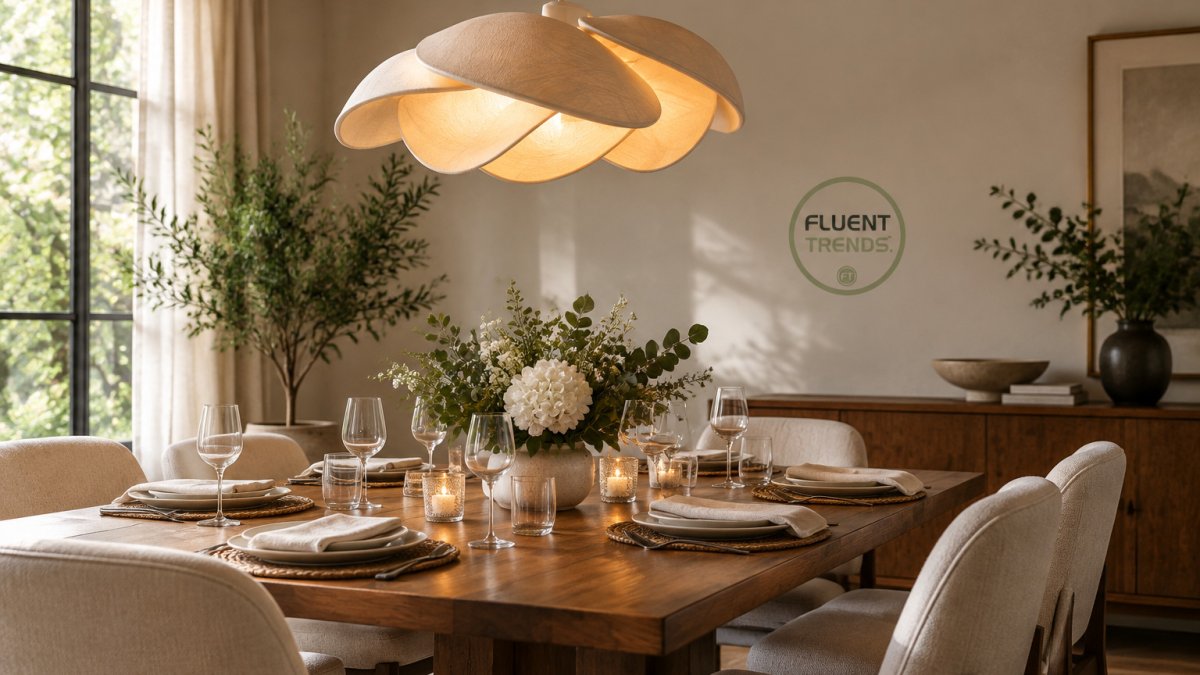
Start by measuring your table. Then decide between a single sculptural pendant and a multi-light arrangement. A single large pendant creates a bold focal point. A cluster of smaller lights feels more relaxed and spreads light more evenly.
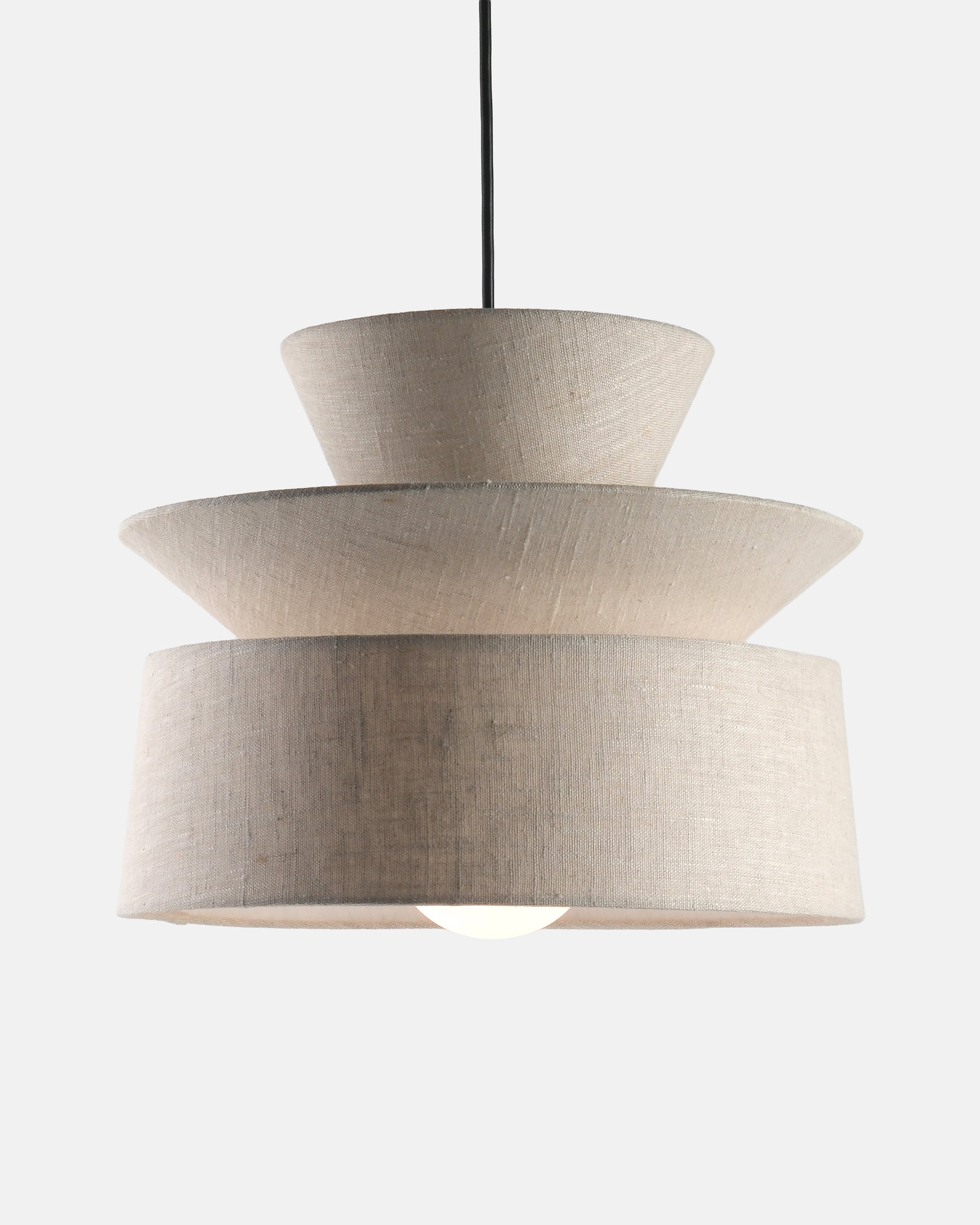
Our Lag Lamp Pendant Light is a strong option here. It's built from three translucent layers of unbleached organic cotton, so it glows softly rather than glaring. You can browse the Lag Lamp Pendant Light in organic cotton and compare the hardwired and plug-in versions. You can choose between hardwired and plug-in installation. At $540.00, it's priced for homeowners who want a pendant that doubles as art.
Keep the light warm. Look for bulbs in the 2700K to 3000K range for dining. Cooler light can make a meal feel clinical.
Picking a Statement Chandelier for the Living Room
Living rooms are more forgiving than dining rooms, but they demand more visual weight because the ceiling often feels far away. A chandelier or large sculptural fixture can fill that space nicely.
Think about sightlines. The fixture should be visible from the entry and from the main seating. If your living room has a fireplace or a large window, consider placing the statement light so it balances that focal point rather than competing with it.
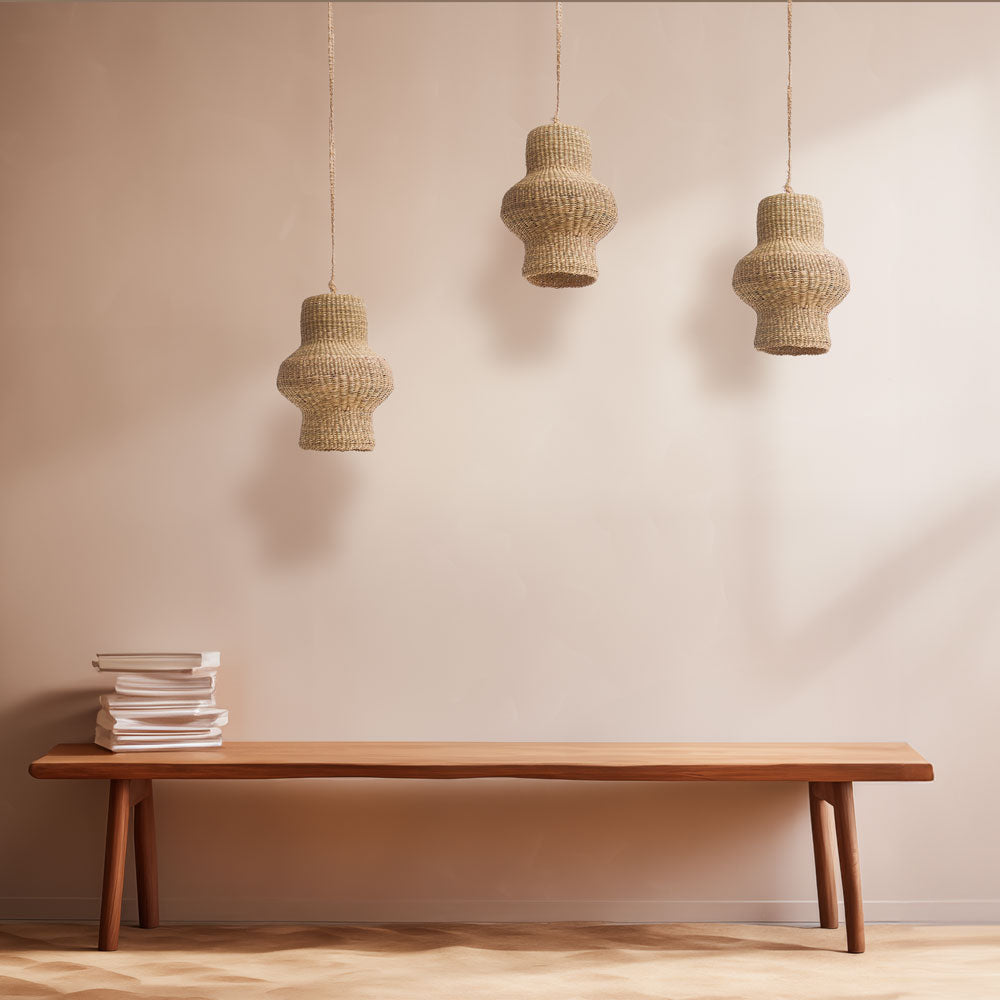
The Oka Curvy Pendant Lamp Shade, at $95.00, is a useful accent when you want texture. You can see the sculptural shade options and how the handwoven form looks in a room. It's handwoven Bolga, so it adds warmth and a natural pattern. Note that the cable and bulb are not included, so budget for those separately.
Layering Ambient, Task and Accent Light
A statement fixture should not be your only light source. Rooms that rely on one ceiling fixture feel flat in the evening. The fix is layering.
Ambient light fills the room evenly. This is often your statement fixture or recessed lighting. Task light supports specific activities, like reading or cooking. Accent light highlights objects, art, or architecture.
Recessed lighting is the most common ambient option, especially in homes with lower ceilings where a large pendant would feel crowded. Our guide to energy-efficient lighting for a luxury home covers which layers to choose. Use it to fill the edges of the room while your statement fixture does the visual work in the center.
A simple rule: put every light on its own dimmer if you can. Being able to shift from bright and social to low and quiet changes how the whole room feels.
Pros and Cons of Common Fixture Materials
Material shapes how light falls and how the fixture ages. Here's how the common options compare.
| Material | Light Quality | Durability | Best For |
|---|---|---|---|
| Organic cotton | Soft, diffused glow | Good with gentle care | Dining rooms, bedrooms |
| Woven grass (Bolga) | Warm, textured shadows | Strong and resilient | Accent and living spaces |
| Solid brass | Warm, reflective | Very durable, develops patina | Entryways, long-term pieces |
| Ceramic stoneware | Sculptural, diffused | Sturdy, but can chip | Modern and minimalist rooms |
Pros of natural fibers: They soften light, look warm, and suit most decor styles.
Cons of natural fibers: They need gentle dusting and can show wear in high-traffic spots.
Pros of metal: It holds up for decades and can be polished or left to age.
Cons of metal: It can read cold in the wrong finish and shows fingerprints on some surfaces.
Pros of ceramic: It creates a sculptural, one-of-a-kind look with each piece slightly different.
Cons of ceramic: It is heavier and more fragile, so careful handling matters.
Installation, Budget and Durability Checks
Before you fall in love with a fixture, confirm it can actually live in your room. That means checking the ceiling, the wiring, and the long-term care routine. Most surprises happen here, not in the showroom.
Start with the ceiling box. A standard box is rated for a ceiling fan or a light fixture up to a certain weight. Many statement pieces exceed that. If your fixture is heavy, ask your electrician about a braced box or a mounting bracket rated for the load. This is not a place to guess. A fixture that pulls loose is a safety issue, not just an inconvenience.
Next, confirm the wiring. Most statement lights need a dedicated dimmer circuit to look their best. A simple on-off switch gives you one mood. A dimmer gives you many. If your home has older wiring, an electrician can tell you whether a dimmer will work without a neutral wire upgrade. That conversation is worth having before you buy. Once the dimmer is settled, consider how luxury home accessories can echo the fixture’s materials and create a more cohesive room.
Budget beyond the fixture itself. Add bulbs, a cord or canopy if they are not included, and installation labor. Some fixtures ship without bulbs or cords, so read the listing closely. A common pattern is to set aside a meaningful portion of the fixture price for installation and controls. That keeps the total project realistic.
Durability comes down to materials and care. Solid brass develops a patina over time and can be polished back if you prefer. Recycled steel just needs a damp cloth. Organic cotton shades need gentle dusting. Knowing the care routine up front helps you keep the piece looking its best for years.
Watch out: a fixture that is hard to reach is hard to maintain. If your ceiling is very high, ask how you will change a bulb or dust the shade. A lift or a long pole is fine for some pieces, not for others. Plan the access before you commit.
Finally, think about the room's daily life. A statement light in a busy hallway will collect dust faster than one in a formal dining room. Choose finishes and shapes that suit the cleaning routine you will actually keep. That is how a beautiful piece stays beautiful.
Choosing Your Focal Fixture This Week
You don't need to solve the whole room today. Pick one focal fixture and build around it. Start with your style photos, measure the room, and narrow to two or three options. For a wider view, read our guide to lighting fixtures for a unified home.
Then choose based on three questions. Does it suit how the room is used? Does it fit the scale of your space? Can you install and care for it without stress? If the answer to all three is yes, you've found your statement light.
Ready to start? Browse our lighting collection and find the piece that fits your room.
Frequently Asked Questions
How high should a chandelier hang over a dining table?
Most designers suggest hanging a dining chandelier about 30 to 36 inches above the table surface. Measure from the tabletop to the lowest part of the fixture. In rooms with ceilings above 9 feet, you can raise it a few more inches. Always check that guests can see across the table without the light blocking their view. Adjust the length with a chain or rod before you finalize the mounting height.
How do you choose a statement chandelier for a living room?
Start by measuring the room's width and adding the two dimensions together in feet, then convert that number to inches for the fixture diameter. Choose a light whose scale fills the space without crowding the furniture. Pick a finish that matches your hardware and metals. Test the fixture's visual weight against your sofa and coffee table before buying. A piece that feels balanced in the room will look more intentional.
What is the 3 lighting rule?
The three lighting rule means every room should have three types of light: ambient, task and accent. Ambient light fills the room evenly. Task light helps you read, cook or work. Accent light highlights art, shelves or architectural details. A statement fixture usually serves as the ambient layer, so pair it with a lamp or recessed lights for the other two. Using all three keeps a room comfortable at any hour.
How do you coordinate statement lighting with furniture and decor?
Repeat one or two materials or metal finishes from your fixture in your furniture, textiles or accessories. This creates a quiet link between the light and the rest of the room. Keep the fixture's shape in conversation with the furniture silhouettes. For example, a rounded pendant pairs well with curved chairs. Limit the room to two or three finishes so the statement light stays the clear focal point.
