

What Is Flatware Made Of and Which Material Is Best?
Yuatinia LeakUnderstanding What Your Flatware Is Really Made Of
Walk down any flatware aisle, and you’ll find that most of what you see is made from stainless steel. It’s the workhorse of the cutlery world for a reason—it’s tough, resists rust, and handles just about anything you throw at it. But it’s far from your only option.
Choosing flatware isn’t just about picking a pretty pattern. The material you select affects everything from durability and weight to price and long‑term care. Stainless steel offers everyday practicality, sterling silver brings heirloom elegance, and modern materials like titanium or bamboo add a contemporary twist. Understanding these differences helps you choose a set that fits your lifestyle, your table, and your budget.
This guide breaks down the most common flatware materials into clear categories so you can shop with confidence and know exactly what you’re bringing home.
Your Guide to Common Flatware Materials
Picking out flatware is a lot like choosing the right car. Stainless steel is your reliable daily driver—dependable, low‑maintenance, and built for everyday use. Sterling silver is the classic convertible you bring out for special occasions—beautiful, but requiring more care. Modern materials like titanium or bamboo offer a stylish, lightweight alternative for those who want something a little different.
Below is a clean breakdown of the three major material groups you’ll encounter.
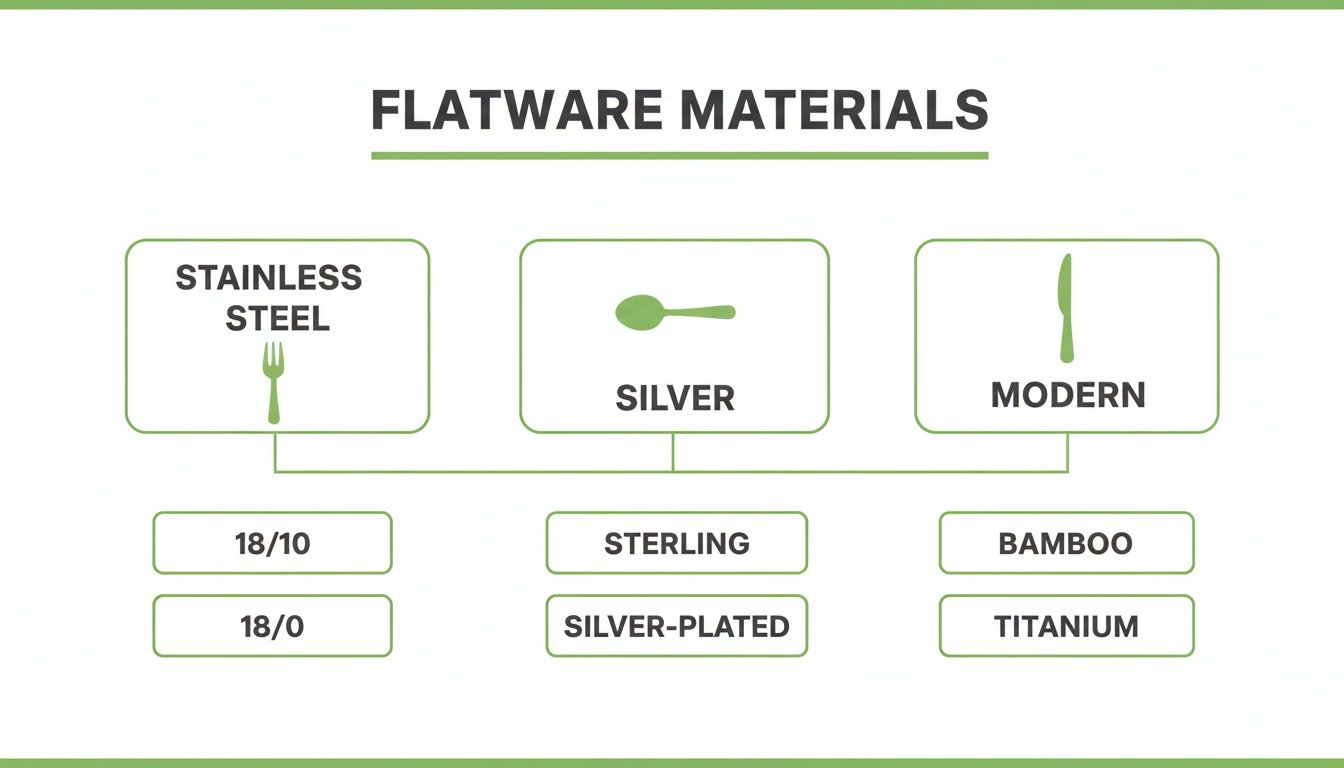
As you can see, it really boils down to three main paths: the everyday practicality of stainless steel, the traditional elegance of silver, or the unique style of modern alternatives. Figuring out which group fits your lifestyle is the first step.
Flatware Materials at a Glance
Choosing flatware isn’t just about aesthetics—it’s about finding the right balance of durability, care, and cost for your lifestyle. Whether you’re outfitting a busy household or curating a formal dining experience, the material you choose will shape how your flatware performs and how it feels in hand.
Here’s a quick comparison to help you weigh your options:
| Material | Durability | Maintenance Level | Typical Cost | Best For |
|---|---|---|---|---|
| Stainless Steel | Very High | Low | $-$$ | Everyday meals and busy households |
| Sterling Silver | High (but soft) | High (polishing) | $$$$ | Heirlooms and formal dining |
| Silverplate | Moderate | High (polishing) | $$-$$$ | The silver look on a budget |
| Titanium | Extremely High | Very Low | $$$ | Modern aesthetics and outdoor use |
| Alternative Handles | Varies (Low-High) | Varies (by material) | $-$$$ | Adding a unique, decorative touch |
Ultimately, knowing what your flatware is made of gives you the power to make a smart investment. You can find a set that not only looks great on your table but also fits seamlessly into your life. Whether you need something you can toss in the dishwasher without a second thought or you dream of the timeless shine of perfectly polished silver, there's a material out there for you.
Decoding the Numbers: 18/10 vs. 18/0
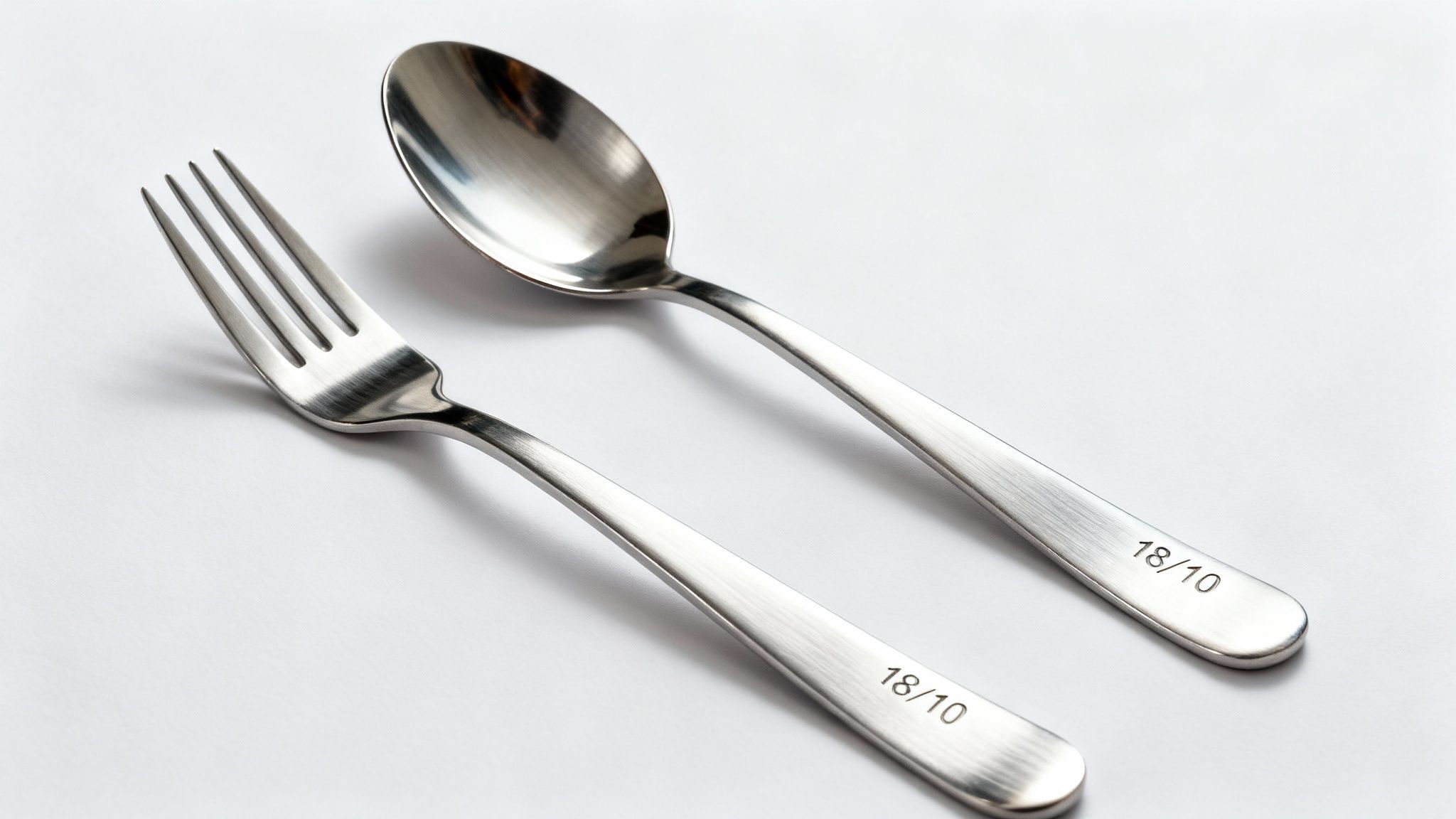
When shopping for stainless steel flatware, you’ll often see numbers like 18/10, 18/8, or 18/0 stamped on the packaging. These numbers aren’t random—they tell you exactly what’s in the alloy.
• The first number is always 18, representing 18% chromium, which gives stainless steel its rust-resistant strength.
• The second number (10, 8, or 0) refers to nickel content, which affects shine, weight, and corrosion resistance.
Breakdown:
• 18/10 – Premium grade with 10% nickel. Heavier, more lustrous, and highly resistant to wear.
• 18/0 – Budget-friendly with no nickel. Lighter, less shiny, and slightly more prone to staining.
If you want flatware that holds up beautifully over time with minimal effort, 18/10 stainless steel is the gold standard.
The Undeniable Benefits of Stainless Steel
Stainless steel is the everyday hero of modern flatware. It’s strong, sleek, and incredibly easy to care for—making it ideal for busy households and casual entertaining alike.
The real beauty of stainless steel is that it's just so easy. You can use it every day, place it in the dishwasher without worry, and trust that it will continue looking great for years with almost no effort.
Whether you’re setting the table for a weeknight dinner or hosting a weekend brunch, stainless steel delivers style and practicality in equal measure.
Looking for a stylish example?
Learn more about this stainless steel cheese knife set — a durable, design‑forward option that showcases the material’s everyday appeal.
The Enduring Appeal of Silver Flatware
Step away from the workhorse world of stainless steel, and you enter the realm of silver flatware—a material that brings a certain gravity, history, and warmth to the dining table. When people think of truly special occasion dining, silver is often what comes to mind. But not all that glitters is the same; there's a world of difference between sterling silver and silverplate.
Getting this right is key. Think of it like a beautiful piece of furniture. Sterling silver is the solid-wood heirloom, crafted from the genuine material through and through. Silverplate, on the other hand, is like a stunning wood veneer—it has that same gorgeous surface, but it's a thin layer over a different core. Both are beautiful, but one is a legacy investment, while the other offers that classic look for less.
The Heirloom Quality of Sterling Silver
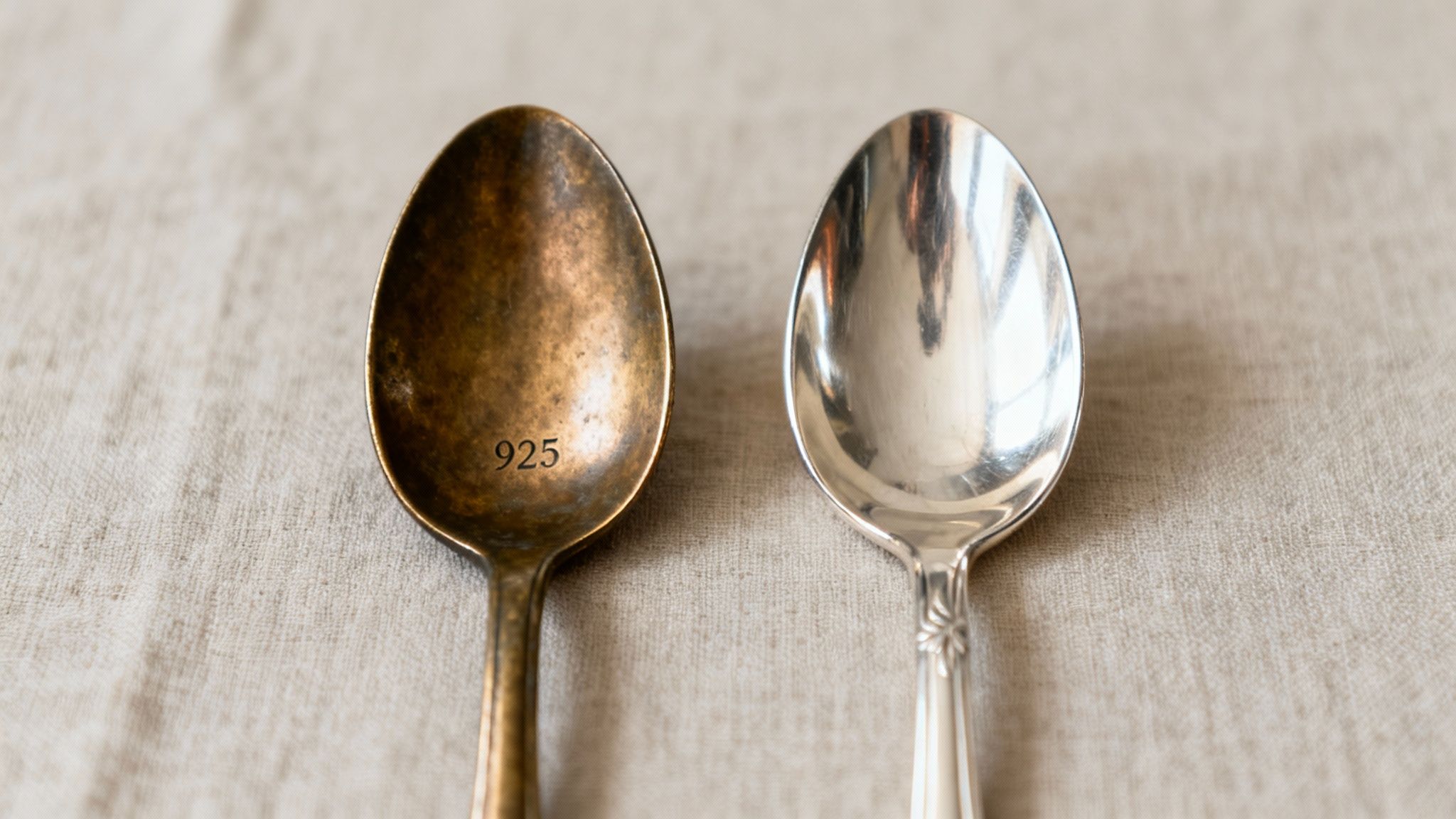
Sterling silver flatware is the definition of timeless elegance. Made from an alloy of 92.5% pure silver and 7.5% copper, it’s designed to last for generations and develop a warm, lived‑in patina that only improves with age.
Why Sterling Silver Stands Out:
• Warm Patina – Over time, sterling silver develops a soft glow that adds depth and character.
• Antimicrobial Properties – Naturally resists bacteria, making it both beautiful and functional.
• Investment Value – Holds monetary worth and is often passed down as a family heirloom.
Sterling silver is like a solid‑wood heirloom piece—rich, enduring, and worth preserving. It’s not just flatware; it’s a legacy.
Silverplate for Accessible Elegance
Silverplate offers the look of sterling silver at a more approachable price point. It’s created by electroplating a base metal—often nickel or brass—with a thin layer of pure silver. The result is a brilliant shine and classic aesthetic that works beautifully for formal settings.
The trade-off for silverplate's affordability is longevity. With repeated use and polishing, the thin silver layer can eventually wear away, revealing the base metal underneath.
Silverplate is like a wood veneer—visually stunning, but not built for heavy wear. It’s ideal for occasional use or decorative table settings.
Want to learn more about silverplate’s role in modern dining?
Read our guide to choosing silverplate flatware for elegant occasions — a deeper look at how to style and care for this classic material.
The Realities of Owning Silver
Silver flatware is undeniably beautiful, but it comes with care requirements that stainless steel simply doesn’t demand.
• Tarnish – Silver reacts with sulfur in the air, creating a darkened surface that requires regular polishing.
• Maintenance – Sterling and silverplate both need gentle handling and consistent upkeep to retain their shine.
• Storage – Silver should be stored in anti‑tarnish cloths or cases to prevent oxidation.
If you love the ritual of polishing and the tradition of formal dining, silver flatware is a rewarding choice. But if you prefer low‑maintenance pieces, stainless steel or titanium may be a better fit.
Exploring Modern and Alternative Materials
While stainless steel and silver remain the classics, today’s flatware landscape is far more diverse. Modern materials bring fresh textures, colors, and personalities to the table—offering style without sacrificing function.
Titanium: Lightweight Strength with a Futuristic Edge
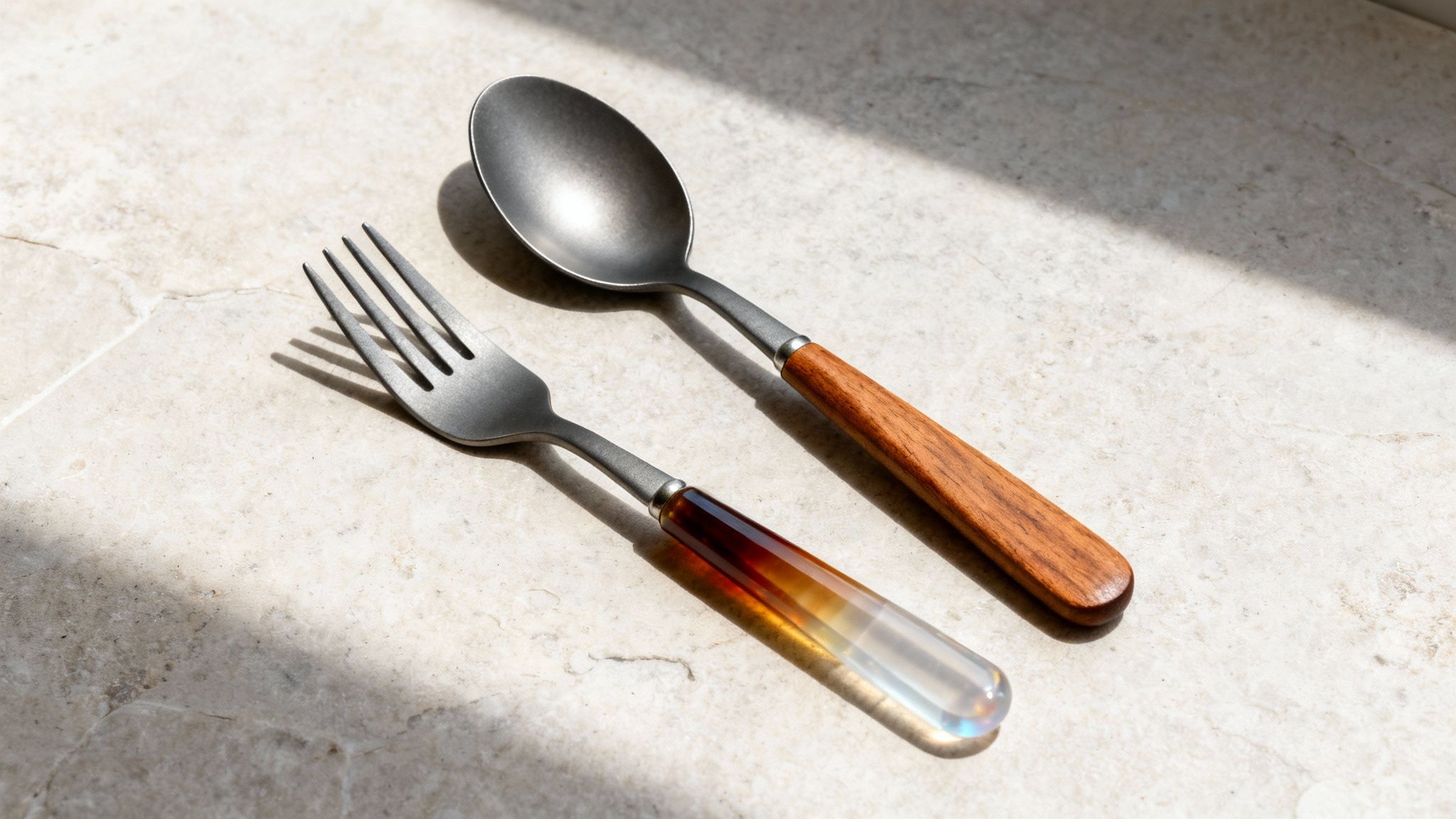
Originally developed for aerospace applications, titanium is now making its way into contemporary dining. It’s incredibly strong yet featherlight, offering the durability of steel with nearly half the weight.
• Corrosion-resistant and scratch-proof
• Hypoallergenic — ideal for nickel-sensitive users
• Signature matte gray finish for a sleek, modern look
Titanium flatware is perfect for those who want minimalist design with maximum performance.
Handles That Tell a Story
The working end of a fork or knife is usually stainless steel—but the handle is where design comes alive. It’s the part you see, touch, and feel most, and it can completely transform the mood of your table.
Popular Handle Materials:
• Wood – Bamboo, olivewood, and pakkawood offer a warm, organic feel. Hand-washing is essential to prevent cracking or warping.
• Acrylic or Resin – Vibrant colors, marbled finishes, and tortoiseshell patterns make these handles bold and expressive.
• Bone or Horn – Rustic luxury with one-of-a-kind texture. These require gentle care but deliver timeless charm.
Choosing a set with alternative handles is like picking out jewelry for your table. It’s a chance to inject personal style, whether you prefer the earthy appeal of wood or the playful pop of colored resin.
The Rise of Eco-Conscious and Disposable Options
Sustainability is reshaping the flatware conversation. Whether you’re hosting an outdoor event or curating a low-impact lifestyle, there are stylish options that don’t compromise on values.
• Reusable Bamboo Flatware – Lightweight, natural, and perfect for picnics or travel.
• Compostable Single-Use Options – Made from cornstarch (PLA), birchwood, or other biodegradable materials. A smarter alternative to plastic.
These materials let you curate a dining experience that reflects your values—without sacrificing style.
How to Choose Quality Flatware You Can Feel
Flatware should feel as good as it looks. The right set has balance, weight, and a finish that feels intentional in your hand. When a utensil feels flimsy or hollow, it takes away from the dining experience.
Quality flatware has presence. It feels grounded, balanced, and made with purpose.
Inspecting the Details
Small design elements reveal a lot about craftsmanship. When evaluating a set, pay attention to:
• A Flawless Finish – Smooth edges and a consistent polish signal quality.
• Well‑Crafted Tines – Fork tines should be even, tapered, and comfortable to use.
• A Solid Knife Blade – A well‑constructed blade should feel sturdy and cut cleanly.
These subtle details separate everyday flatware from pieces that feel thoughtfully made.
Practical Tips for Making Your Choice
Before committing to a set, try to handle a piece in person or order a single sample. The goal is to find flatware that feels balanced and comfortable in your hand.
Flatware is something you reach for every day—choosing the right set makes each meal feel intentional.
If you’re comparing materials or narrowing down your options:
Learn more about choosing quality kitchen materials to understand what contributes to long‑lasting, well‑crafted flatware.
Explore our top picks for everyday flatware sets for durable, stylish options that blend form and function.
Caring for Your Flatware to Make It Last
A quick visual guide to preserving your flatware’s beauty.
Quality flatware deserves thoughtful care. A few simple habits can preserve its appearance for years:
• Use gentle detergents
• Dry promptly after washing
• Store in a clean, dry drawer or case
These small steps help maintain shine and prevent wear.
Special Care by Material Type
• Stainless Steel – Avoid harsh cleaners to prevent cloudy spots.
• Sterling & Silverplate – Polish regularly and store in anti‑tarnish cloths.
• Wood, Bone & Acrylic Handles – Always hand‑wash and avoid soaking.
With the right care, your flatware becomes a long‑term investment in your dining experience.
Choosing the right flatware is ultimately about elevating the everyday. Whether you’re drawn to the timeless glow of silver, the durability of stainless steel, or the personality of modern materials, the pieces you bring into your home should feel intentional and well‑made. When you understand how each material performs—and how to care for it—you can build a collection that not only complements your style but also stands up to real life. With thoughtful choices and simple maintenance, your flatware becomes more than a utensil; it becomes a quiet expression of how you live, gather, and enjoy your table.