

How to Spot True Small Batch Pottery
Yuatinia LeakLast Updated: November 4, 2026
Quick Summary
Small batch pottery is ceramic ware made in short production runs, usually by one maker or a tiny team, with each piece shaped, glazed, and fired in a limited quantity rather than an endless identical line. The honest marker is repeatability, so ask a seller how many pieces exist in a run. A confident, specific answer tells you more than any label.
- Two mugs from the same batch can differ in height, weight, and glaze depth.
- A wobbly base or hairline crack is a flaw, not handmade character.
- A firing cycle runs for hours no matter how full the kiln is.
- Ask how many times the maker touches a single piece before it ships.
- Start with a mug or small bowl you will use weekly, then scale up.
Table of Contents
- What Small Batch Pottery Actually Means
- How Small Batch Ceramics Get Made, Step by Step
- Why Handmade Pottery Pieces Never Match Exactly
- Functional Pottery vs. Decorative Pieces: What Lasts
- Small Batch vs. Mass-Produced: The Real Differences
- What Drives the Price of Small Batch Pottery
- Sustainability and Waste in a Studio Practice
- Buying Small Batch Pottery for Sale: A Checklist
- Choosing Your First Small Batch Piece
- Frequently Asked Questions
What Small Batch Pottery Actually Means
Small batch pottery is ceramic ware made in short production runs, usually by one maker or a tiny team, with each piece shaped, glazed, and fired in a limited quantity rather than an endless identical line. At Fluent Trends, we describe it as pottery where a human hand still touches every stage.
That definition matters because "handmade" gets stretched thin online. A factory can stamp a "hand-painted" label on ten thousand identical mugs. Small batch means the run itself is short. To see what that approach looks like in practice, explore our curated artisan home decor collections.
The difference shows up in the details. You will see slight shifts in glaze color between two pieces. You will find a thumbprint near a rim. Those are signatures, not defects.
Below, we will show you exactly how to tell true small batch work from a mass-produced lookalike, and what to check before you buy.
The Numbers Behind a Small Run
There is no legal cutoff that defines a small batch. Run size varies widely from one maker to the next.
The honest marker is repeatability. If a maker can restock the exact same mug in the exact same glaze next month, the run was probably not that small. If a design sells out and returns with a slightly different tone, you are looking at real batch work.
Ask a seller how many pieces exist in a run. A confident, specific answer tells you more than any label.
How Small Batch Ceramics Get Made, Step by Step
Every piece starts as a lump of clay on a work surface. The maker wedges it to push out air pockets, then shapes it by hand or on a wheel. From there, the piece dries slowly, gets trimmed, and waits for its first firing.
Here is the general sequence most studios follow:
- Wedge and weigh the clay body
- Shape the piece by hand-building or wheel-throwing
- Trim and refine the form once it firms up
- Let it dry completely to avoid cracking in the kiln
- Run the bisque firing cycle
- Apply glaze by dipping, brushing, or pouring
- Fire again at glaze temperature
- Inspect, sand rough feet, and sort out seconds
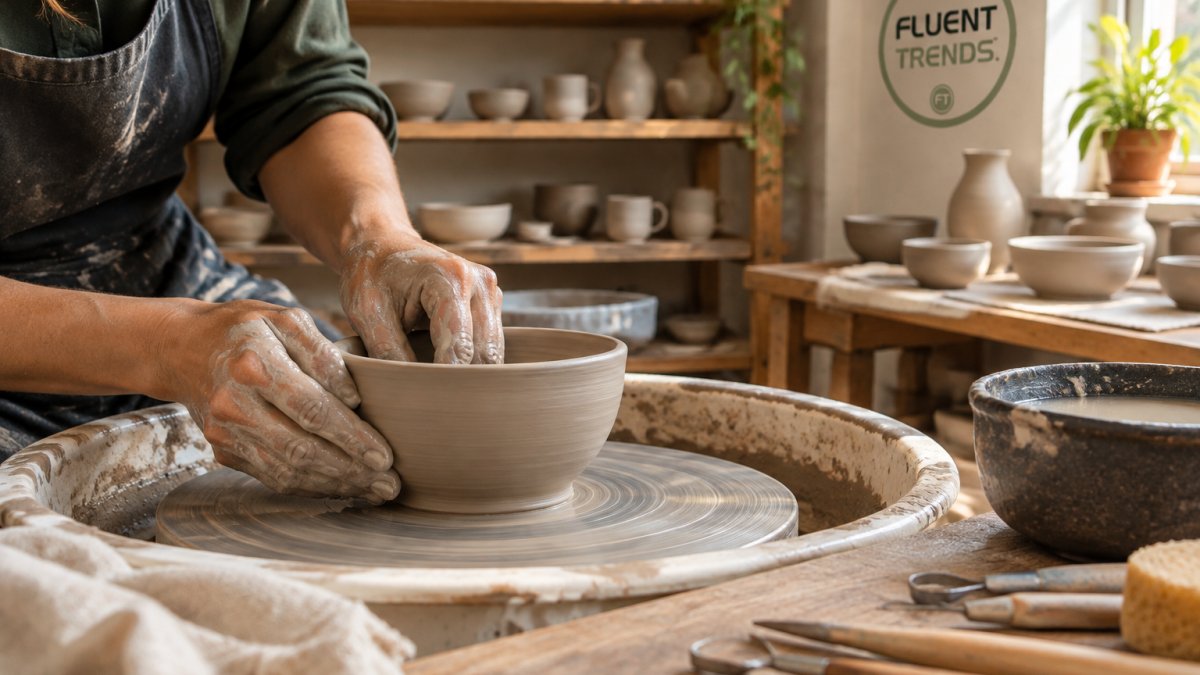
Firing cycles take hours, and the kiln has to cool slowly. A maker cannot rush that clock.
Hand-Building vs. Wheel-Throwing
Hand-building uses slabs of clay, coils, or pinched forms. It suits sculptural work, textured surfaces, and pieces with irregular edges. Wheel-throwing pulls clay upward on a spinning wheel for round, symmetrical forms like mugs and bowls.
Both methods leave telltale marks. Wheel-thrown pieces often show faint horizontal rings. Hand-built pieces show seams, joins, or a slightly uneven wall.
Neither method is better. They simply produce different characters, and many studios use both in one collection.
Why Handmade Pottery Pieces Never Match Exactly
Clay shrinks as it dries and fires. Glaze flows and pools differently on every surface. Kiln temperature varies by a few degrees from shelf to shelf. Those small forces add up.
So two mugs from the same batch can differ in height, weight, and glaze depth. A potter calls this variation. A buyer should call it proof of handwork.
Watch out: some sellers use "handmade" to excuse genuine flaws. A wobbly base that rocks on a table is not charm. A hairline crack through the wall is not character. Variation in color and form is normal; structural failure is not.
A good studio sorts those problems out before shipping and sells them as seconds, if at all.
Functional Pottery vs. Decorative Pieces: What Lasts
Functional pottery is made to be used: mugs, plates, bowls, serving pieces. Decorative pottery is made to be looked at: vases, sculptural forms, wall pieces. Both can last for decades, but they face different stresses.
Functional ware needs a food-safe glaze, a fully vitrified clay body, and a sturdy foot ring. A dishwasher-safe finish helps daily use. Decorative pieces can carry softer glazes and thinner walls because they never meet a fork.
If you want a piece you will actually reach for every morning, prioritize function. Our Lhasa Mug | Limoges Porcelain is built for that daily role, with a food-safe glaze inside and out.

Small Batch vs. Mass-Produced: The Real Differences
Mass-produced pottery wins on consistency and price. Small batch pottery wins on character, repairability, and the story behind the piece. The trade-off is real, and you should choose with eyes open.
| Factor | Small Batch Pottery | Mass-Produced Pottery |
|---|---|---|
| Consistency | Slight variation per piece | Identical unit to unit |
| Run size | Limited, often sells out | Continuous restock |
| Glaze work | Applied by hand | Machine or spray line |
| Repairability | Maker can often advise | Replace-only model |
| Price | Higher per piece | Lower per piece |
| Longevity | Decades with care | Varies widely |
The mass-produced option is not evil. It fills a need. But if you want a piece that feels like yours, small batch is the path.
For a deeper look at how handwork compares to machine output, read our comparison of handmade vs machine made throws.
Lhasa Mug | Limoges Porcelain →
What Drives the Price of Small Batch Pottery
A handmade mug can cost several times what a molded import costs. That gap confuses people. So let us walk through where the money actually goes.
Clay and glaze are the cheap part. A potter's hands are the expensive part. One mug gets touched a dozen times before it ships. Wedging, shaping, trimming, drying checks, glazing, loading the kiln, unloading, inspecting, sanding the foot. Each touch is minutes. Minutes add up fast.
The kiln is the silent cost driver. A firing cycle runs for hours no matter how full the kiln is. A half-empty kiln wastes the same fuel and time as a full one. So makers batch pieces to fill shelves. That is literally where the phrase small batch comes from.
Then there is the failure rate. Pots crack in the kiln. Glazes crawl or blister. Rims warp. A common pattern in studios is that a meaningful share of every load becomes seconds or scrap. Those losses get absorbed into the price of the pieces that survive. A factory hides this with volume. A small studio cannot.
Watch out: a seller who cannot explain why a piece costs what it does is often reselling without adding value. Ask how many times the maker touches a single piece. The answer tells you a lot.
There is also the middle layer. We source from reputable purveyors who research and vet makers, and that chain adds cost but also accountability. You are paying for a documented origin and a piece that was not rushed through a spray line.
The math favors buyers who think in years. A well-made mug used daily for a decade costs pennies per use. A cheap mug that chips in a year costs more in replacement and frustration.
If you want to see how durable construction shows up in everyday pieces, browse our collection of durable furniture for daily use. The same logic applies to pottery. Build quality beats sticker price over time.
Sustainability and Waste in a Studio Practice
Start with the kiln. Firing a full kiln is far more efficient per piece than firing a half-empty one. A small studio that batches pieces to fill shelves is actually running a tighter ship than a factory that fires continuously on a schedule.
The bigger story sits upstream. Small runs mean less overproduction. Overproduction is the quiet waste engine of mass retail. Unsold inventory gets discounted, shipped, and eventually discarded.
Watch out: eco-friendly is an unregulated phrase. Ask what the claim actually means. A food-safe glaze and a reclaimed clay body are concrete. A green leaf icon is not.
Handmade goods also carry cultural knowledge forward. Buying from makers helps keep techniques alive across generations. You can learn more about why handmade goods support cultural heritage.
If you care about verified material claims in your home, look for OEKO-Tex certification on textiles. Our Sunday Citizen signature line is OEKO-Tex certified, which means it has been tested for harmful substances. That is the kind of concrete standard worth asking about in pottery too. Ask whether the glaze is food-safe and lead-free. Ask whether the clay body is fully vitrified. Those answers matter more than any badge.
Buying Small Batch Pottery for Sale: A Checklist
Before you check out, run this list. It separates a considered purchase from an impulse one.
- Does the listing name the maker or studio?
- Is the run size stated, or at least implied?
- Are dimensions and volume listed in inches and ounces?
- Is the glaze described as food-safe where relevant?
- Is care guidance included, such as dishwasher or hand-wash?
- Are handmade variations disclosed up front?
- Does the seller explain shipping and breakage policy?
- Can you see multiple photos of the actual piece type?
If three or more boxes stay empty, slow down. A serious seller answers these without being asked.
Choosing Your First Small Batch Piece
Start with something you will use weekly. A mug or a small bowl teaches you how the piece feels in hand, and it costs less than a statement vase. Once you know what you love, scale up.
Think about your room before you fall for a photo. A minimalist space can absorb one strong sculptural piece without clutter. A busy shelf needs quieter forms.
If you want a low-risk entry point, browse the Japanese mix match ceramic side plates. They let you test a maker's glaze and finish before committing to a larger piece.

Our advice: buy one piece, live with it for a month, then decide. Pottery rewards patience.
Frequently Asked Questions
What does small-batch pottery mean?
It means a maker produces pottery in short runs instead of thousands at a time. Each piece passes through the same hands at every stage, from shaping to glazing. Because the volume is low, the maker can check each item before it fires. That is why small batch pottery often carries slight variations and a higher price than factory ware. You are paying for attention, not volume.
How can you tell whether pottery is handmade?
Look at the base first. Handmade pottery usually shows a trimmed foot ring, a maker's mark, or faint throwing lines. Check the rim for small irregularities. Look at the glaze where it pools near the bottom. Factory pieces are identical, so two units side by side should look the same. If they do, it is likely mass-produced. Ask the seller how many pieces were made in the run.
Is small batch pottery safe for food and drink?
Most functional pottery is food safe when the maker uses a proper glaze and fires it correctly. Ask whether the glaze is labeled food safe and whether the piece is meant for daily use. A well-glazed mug or bowl handles coffee, soup, and sauces without issue. Avoid unglazed interiors on pieces sold for eating. Dishwasher safe pieces are usually marked or described as such.
Why do handmade pottery pieces vary from one another?
Clay moves under a hand in ways it never does under a mold. Glaze thickness changes how color reads after firing. Kiln position affects heat, so two identical pieces can come out slightly different. Those variations are proof of handwork, not defects. A maker running a short batch accepts them as part of the result. If you want exact duplicates, small batch is the wrong category.
Most shoppers never learn to spot real handwork, and that gap lets factory copies pass as studio work. We built Fluent Trends to close it. Our Artisan Collection is sourced from reputable purveyors, with handcrafted pieces from woman-owned workshops and a focus on food-safe glazes and lasting materials. You can start small with a single mug or explore curated artisan collections that tell a real story. Get started with Fluent Trends and furnish your home with pieces made to be used for decades.
