

How Long Do Eco-Friendly Mattresses Last? A Realistic Guide
Yuatinia LeakLast Updated: November 5, 2026
Quick Summary
Eco-friendly mattresses typically last 10 to 15 years, compared with 6 to 9 years for conventional foam beds. Natural latex, certified organic cotton, and wool cores age slowly and sag less. Rotating the bed and controlling moisture help you reach the top of that range.
- Natural latex keeps its bounce and support longer than synthetic foam cores.
- Rotate your bed head to foot instead of flipping a one-sided design.
- Body impressions deeper than one inch signal it is time to replace.
- Warranties cover broken coils and split seams, not normal comfort loss.
- A solid platform foundation prevents uneven pressure and dips.
Table of Contents
- Eco-Friendly Mattress Lifespan: What the Ranges Really Mean
- Organic Mattress Lifespan by Material and Construction
- What Type of Mattress Has the Longest Lifespan?
- Eco-Friendly vs Conventional Mattress: A Side-by-Side Comparison
- How to Care for an Organic Mattress So It Lasts Longer
- Signs You Need to Replace Your Mattress
- Warranty Length vs Real Usable Life
- What Happens to an Eco-Friendly Mattress at End of Life
- Choosing a Mattress Built to Last Decades
- Frequently Asked Questions
Eco-Friendly Mattress Lifespan: What the Ranges Really Mean
Most shoppers hear "10 to 25 years" and assume one number fits every bed. It doesn't. The lifespan of eco-friendly mattresses depends on what's inside them, how they're built, and how you treat them. We source from reputable purveyors who build with organic cotton, natural latex, and certified wool. Those materials age differently than budget foam. The gap comes down to density, construction, and honest materials.
Organic Mattress Lifespan by Material and Construction
Organic mattress lifespan starts with the core. Natural latex keeps its bounce and support well. Certified organic cotton covers breathe well. Wool adds resilience and natural moisture control. Construction matters just as much as material.
Natural Latex vs Synthetic Latex
Natural latex comes from rubber tree sap. It stays springy and supportive over time.
Organic Cotton, Wool, and Foam Layers
Organic cotton is breathable. Wool is a natural material. Non-toxic foam supports spinal alignment but compresses over time. Look for certified foam so you know what you're breathing near all night. If you're weighing certification claims, read is OEKO-TEX certified worth it for your home. OEKO-TEX certification standards
What Type of Mattress Has the Longest Lifespan?
Natural latex, wrapped coils, and breathable natural covers are features to look for in a mattress built to last. If you want heirloom-level durability, study what real quality construction looks like with our guide on what makes furniture heirloom quality. The same rules apply to beds: dense materials, tight joints, and honest builds.
Eco-Friendly vs Conventional Mattress: A Side-by-Side Comparison
Eco-friendly mattresses are often priced higher upfront than conventional foam beds. Here's how they compare on the factors that matter most.
| Factor | Eco-Friendly Mattress | Conventional Mattress |
|---|---|---|
| Core material | Natural latex, coils | Memory foam, synthetic foam |
| Typical lifespan | 10-15 years | 6-9 years |
| Sagging risk | Lower | Higher |
| Breathability | High | Low to medium |
| End of life | Often recyclable | Mostly landfill |
Before you trust any green label, learn how to spot greenwashing in decor. The same skepticism applies to mattress marketing.
How to Care for an Organic Mattress So It Lasts Longer
Care advice only works when it matches what is inside the bed. A natural latex core wants airflow. A wool comfort layer wants dry air and gentle cleaning. A milk/casein fiber blend wants to stay cool and unwashed. Treat every eco mattress the same and you shorten its life. Here is how to care for each material on its own terms.
Rotation, Foundation, and Moisture Control
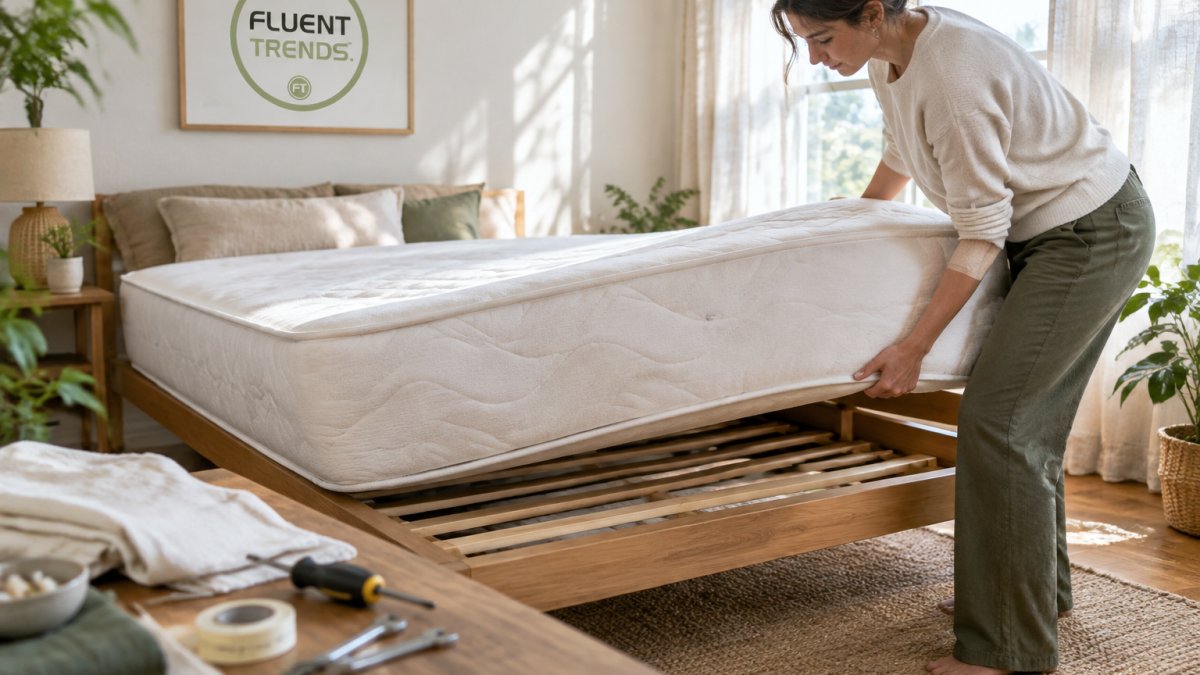
Set a phone reminder so you actually do it. Rotation spreads body weight across the surface and delays soft spots. Most latex and hybrid beds are not designed to flip. Rotate head to foot instead. Flipping a one-sided bed can crush the comfort layer.
Your foundation matters as much as the mattress. A solid platform or a sagging box spring puts uneven pressure on the bed. Over time that pressure shows up as dips and a hollow feel.
Moisture is the quiet killer of natural materials. For sensitive skin, learn which pillowcase material works best. Sweat, humidity, and spilled drinks all feed mildew in cotton and wool.
Material-Specific Care for Latex, Wool, Cotton, and Casein Fiber
Natural latex needs airflow and gentle handling.
Milk/casein fiber is a newer sleep surface material. It feels cool and smooth and is naturally hypoallergenic. Treat it like silk. Spot clean only, use a washable protector, and keep it away from heat. A casein-blend cover paired with Portugal-woven bedding and OEKO-TEX certified sheets keeps the surface calm and breathable.
Bedding and Surroundings That Protect the Mattress
What you put on the bed affects how long it lasts. Choose hypoallergenic, OEKO-TEX certified bedding for a softer sleep surface. A Cloud Silque Throw or an Avenida in Bosque 18" x 18" Pillow adds softness to the bedroom.
Your frame matters too. Acacia and Sheesham wood are sturdy choices for a bed frame. Sheesham scores around 1,410 lbf on the Janka scale, so it resists denting. If you want a frame built for daily use, browse our durable furniture for daily use collection.
Signs You Need to Replace Your Mattress
Most replacement advice tells you to wait for a fixed year. That is the wrong test. Judge the bed by what it does, not by how old it is. Here is a practical checklist you can run in ten minutes.
Clean Design Home® Mattress - Rainey Street™ →
A Ten-Minute Replacement Checklist
Start with your body. Do you wake with stiffness that fades within an hour? Does it happen most mornings? That is a support signal, not a mattress age signal. Next, lie on the bed and roll toward the center. If you drift without trying, the core has softened. Press the center with your palm. If it sinks more than an inch and stays down, the comfort layer is compressed. These physical indicators often reveal that the internal structure has reached its limit, a common concern when evaluating bed in a box durability.
Look for visible cues. Body impressions deeper than one inch are a real concern. Lumpy spots, torn seams, or broken coils are structural failures. Musty smells or visible mildew mean moisture has reached the core. Any of these means the bed is done, regardless of age.
Track your sleep for two weeks. If you sleep better on a hotel bed or a guest room bed, your mattress is likely the problem. That comparison is one of the most reliable signals you have.
Warranty Defects vs Normal Wear
Warranties cover manufacturing defects, not comfort loss. A broken coil or a split seam usually qualifies. A body impression under the warranty threshold usually does not. Read your specific terms before you file a claim.
Normal softening is not a defect. Latex and foam both lose a little loft over time. That is expected. The question is whether the bed still supports your spine. If it does, keep it. If it doesn't, the warranty likely will not help you anyway.
Repair, Refresh, or Replace
Not every problem needs a new mattress. A sagging bed on a weak foundation often improves with a new slatted base. A musty smell can sometimes be fixed with airing and a washable protector. A thin topper can buy a year or two on a firm but aging core.
Replace when the core has failed. Repair when the frame or foundation is the problem. Refresh when the surface is worn but the support is intact. That order saves money and keeps usable materials out of the waste stream.
When to Replace by Material
If your bed has a casein blend cover, check it for pilling and thinning before you blame the core.
Use the checklist first. Use the material range second. Use the calendar last. That order keeps you from replacing a good bed too early and from sleeping on a bad one too long.
Warranty Length vs Real Usable Life
Warranty terms and real comfort life can differ. Read the fine print before you buy.
What Happens to an Eco-Friendly Mattress at End of Life
Check local recycling options before you haul an old bed to the curb.
Choosing a Mattress Built to Last Decades
Buy for materials, not marketing. Natural latex, certified organic cotton, and certified wool are the signals of a bed that ages well. If you want a specific option, our Clean Design Home Rainey Street mattress pairs certified organic cotton, natural latex, and wrapped coils in one build. We also love pairing a lasting bed with durable decor. Think Acacia and Sheesham wood furniture, where Sheesham scores around 1,410 lbf on the Janka scale. Add Portugal-woven bedding, OEKO-TEX certified pieces, and hypoallergenic layers for a bedroom that feels good night after night.

Frequently Asked Questions
Is it okay to keep a mattress for 20 years?
Rarely. Most eco-friendly mattresses land between 8 and 15 years of real use. Watch for sagging, body impressions, and morning stiffness. If you wake up sore or the surface feels uneven, the mattress is done regardless of its age.
How long do eco-friendly mattresses typically last?
Plan on 8 to 15 years for most eco-friendly mattresses. Natural latex sits at the top of that range, often 12 to 15 years. Hybrids with latex and pocketed coils land around 10 to 12. All-foam plant-based models usually run 7 to 10. Care matters as much as material. A supportive frame, regular rotation, and a breathable protector can add years. Skip the protector and the same bed may sag in half the time.
How can you tell when an organic mattress needs replacing?
Look for visible sagging deeper than about an inch, permanent body impressions, and a surface that no longer springs back. Notice how you feel: morning back pain, allergy flare-ups, or waking more often than you used to. Check the foundation too, since a cracked slat mimics a bad mattress. If the bed is past year eight and two or more signs show up, start shopping.
Do mattress materials affect how long a mattress lasts?
Yes, more than any other factor. Natural latex, organic cotton, wool, and coil systems each play a role in how a mattress is built. Materials also decide care: latex likes airflow, wool needs gentle cleaning, and cotton covers wash cool. Match your routine to the build.
A bed should reward you for a decade or more, not just the first year. Start with honest materials and care for them well. At Fluent Trends, we curate ethically made pieces built to last, from certified organic bedding to sustainably sourced wood furniture. Explore our durable furniture for daily use and build a bedroom that ages beautifully. Get started with Fluent Trends and invest in pieces that stay with you.
